
Transform Energy Expenses into Competitive Advantages
Identify energy inefficiencies, optimize utility consumption, and reduce operational costs through structured energy efficiency audits in India, enabling data-driven improvements across industrial systems and facilities.

Utility Cost and Energy Efficiency Audits in India
Utility cost and energy efficiency audits in India are becoming essential as manufacturers and industrial facilities face rising energy prices, regulatory pressure, and sustainability targets. Energy typically accounts for 10–20% of total operating costs in manufacturing, and studies suggest that structured energy audits can help reduce bill by 5–25% through optimized usage and system improvements. With India advancing energy efficiency initiatives under programs such as Perform, Achieve and Trade (PAT) and increasing focus on ESG compliance, organizations are prioritizing data-driven energy management strategies.
Energy efficiency audits involve a detailed assessment of electricity, fuel, water, steam, and compressed air systems to identify inefficiencies, leakages, and performance gaps. These audits evaluate consumption patterns, equipment performance, and operational practices to recommend targeted improvements that reduce waste and enhance system efficiency.
IMARC Engineering provides utility cost and energy efficiency audit services in India through engineering-led assessments, energy modelling, and performance diagnostics. We help organizations identify cost-saving opportunities, optimize utility systems, and implement efficiency measures, enabling reduced operational costs, improved equipment performance, and alignment with sustainability and regulatory requirements.
Our Strategic Approach to Utility Cost and Energy Efficiency Audits
Our systematic audit methodology combines data analysis, engineering assessment, and financial modeling to identify cost-effective efficiency improvements. This proven four-phase framework addresses every critical dimension affecting utility performance and delivers actionable recommendations supporting investment decisions.


Data Collection and Baseline Establishment
Gathering utility consumption records, analyzing historical trends, conducting facility surveys, and establishing baseline performance metrics providing foundations for efficiency opportunity identification and savings quantification.

Technical Assessment and Opportunity Identification
Evaluating equipment efficiency, identifying operational improvements, assessing building envelope performance, analyzing utility rate structures, and quantifying energy-saving opportunities through detailed engineering calculations and measurements.

Financial Analysis and Prioritization
Developing investment-grade financial models calculating implementation costs, projected savings, payback periods, and return metrics while prioritizing recommendations based on financial attractiveness and operational feasibility.

Report Delivery and Implementation Support
Presenting comprehensive audit findings, providing detailed implementation guidance, identifying available incentives, and offering ongoing support during project execution validating savings achievement and optimizing performance.
Why Choose IMARC Engineering for Utility Cost and Energy Efficiency Audits in India?
Our comprehensive audit approach combines technical expertise, financial acumen, and practical implementation knowledge to deliver actionable efficiency roadmaps. This integrated methodology addresses every dimension affecting utility performance and ensures recommendations translate into realized savings.

Manufacturing Process-Informed Energy Analysis
Energy efficiency assessments that compare a manufacturing facility’s utility consumption to generic industry benchmarks without reference to the facility’s specific process technology, product mix, production schedule, and operating conditions produce saving opportunity estimates that are not achievable within the facility’s actual operational constraints. A pharmaceutical cleanroom facility that is assessed against a broad pharmaceutical sector energy benchmark without accounting for the ISO classification requirements that mandate specific air change rates and HVAC operating parameters will be identified as having HVAC energy saving opportunity that does not exist within the regulatory compliance requirements. A chemical manufacturing facility assessed against a chemical sector average without reference to its specific reaction endotherm and distillation energy requirements will receive compressed air saving recommendations that have no application to its process. IMARC Engineering’s energy audits integrate manufacturing process knowledge with utility system engineering, identifying genuine saving opportunities within the production, regulatory, and operational constraints of each specific facility rather than generic benchmark gaps.

BEE PAT Scheme Compliance Assessment
India’s Bureau of Energy Efficiency Perform, Achieve and Trade scheme designates large energy-consuming manufacturing facilities as Designated Consumers with mandatory Specific Energy Consumption reduction targets assessed over three-year PAT cycles, with tradeable Energy Saving Certificates issued for over-achievement and financial penalties for under-achievement. Facilities designated as Designated Consumers in PAT Cycle VI and subsequent cycles require a detailed energy audit as the basis for BEE compliance planning, establishing the current SEC baseline, identifying reduction opportunities, and planning the efficiency improvements required to meet or exceed the PAT target. IMARC Engineering’s energy audits for potential and confirmed PAT Designated Consumers are structured to generate the BEE submission-ready SEC baseline documentation, improvement opportunity assessment, and energy performance tracking framework required for PAT compliance management, enabling facilities to plan for compliance from the PAT cycle commencement rather than discovering the compliance gap at the mid-cycle assessment.

India-Specific Tariff Structure Analysis
The financial return on energy efficiency investments in India is determined not only by the physical quantum of energy saved but by the tariff structure under which the saved energy would have been procured. India’s State Electricity Regulatory Commission tariff orders for industrial consumers impose demand charges on maximum recorded demand, time-of-use energy rates with peak and off-peak differentials, power factor penalty and incentive clauses, and reactive energy charges that create a complex financial structure where the saving value of a kilowatt-hour of electricity depends on when it is consumed, what power factor it is associated with, and whether it affects the demand charge peak. IMARC Engineering’s energy audit financial analysis maps identified saving opportunities against the client’s specific SERC tariff structure, calculating the precise financial value of each saving opportunity in terms of actual rupee saving per annum rather than kilowatt-hours saved, ensuring that efficiency investment decisions are made on accurate financial returns.

Compressed Air, Steam, and Cooling Water Loss Quantification
Compressed air, steam, and cooling water systems in Indian manufacturing facilities consistently rank as the highest-return energy saving opportunity categories because losses in these systems are typically invisible to routine operational monitoring, accumulate continuously through leakage and inefficiency, and are correctible through investments with payback periods of one to three years. A compressed air system with a significant leak rate of compressor output, common in Indian manufacturing facilities where leak detection and repair is not systematically managed, represents annual energy waste equivalent to tens of lakhs of rupees in power cost for a facility with a compressed air load above one hundred kilowatts. IMARC Engineering quantifies losses in compressed air, steam, and cooling water systems through physical measurement, using ultrasonic leak detectors, thermal imaging, steam trap surveys, and cooling tower performance testing, and prepares investment justifications for each corrective measure with payback period calculations against the facility’s actual utility tariff.

Renewable Energy and Captive Generation Integration Assessment
Energy cost reduction in Indian manufacturing facilities through efficiency improvement is increasingly complemented by renewable energy procurement through captive solar power, open access power purchase agreements, and wind energy procurement, with the economics of each option depending on the facility’s consumption profile, state open access regulations, wheeling charge structure, and physical site constraints. An energy audit that identifies efficiency saving opportunities without simultaneously assessing the renewable energy procurement options available to the facility provides an incomplete picture of the total energy cost reduction achievable. IMARC Engineering integrates renewable energy and captive generation assessment into the energy audit engagement, evaluating rooftop and ground-mounted solar viability against the facility’s available roof and land area, power consumption profile, and applicable SERC regulations, and assessing open access power purchase agreement economics against current DISCOM tariff to identify the combination of efficiency improvement and renewable procurement that minimises total energy cost.

Implementation Support Converting Audit Findings into Realised Cost Savings
Energy audit reports that are delivered, filed, and not implemented generate zero financial return on the audit investment and the majority of energy audits commissioned in Indian manufacturing facilities produce reports whose high-priority recommendations remain unimplemented eighteen months after delivery because no party takes accountability for driving implementation from recommendation to verified saving realisation. IMARC Engineering structures energy audit engagements with implementation support as a defined deliverable, providing project management support for high-priority efficiency improvement projects, procurement advisory for energy efficiency equipment, contractor supervision for installation, and post-implementation measurement and verification that confirms the saving achieved against the audit’s prediction. This implementation accountability transforms energy audit findings from a reporting exercise into a financial return generating programme with verified saving outcomes that satisfy ESG reporting, lender sustainability requirements, and management ROI expectations.
Utility Cost and Energy Efficiency Audits Across Key Sectors in India
IMARC Engineering delivers manufacturing process-informed energy analysis, BEE PAT compliance assessment, SERC tariff-based saving quantification, compressed air and steam loss measurement, renewable energy integration assessment, and implementation support across India’s most active manufacturing sectors.
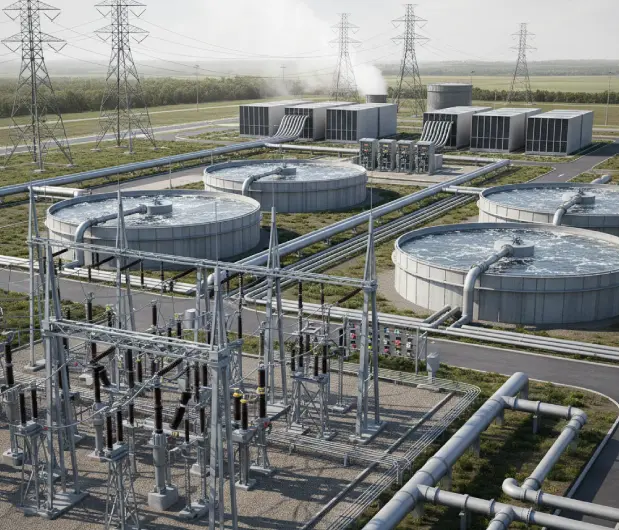
Energy efficiency audits for pharmaceutical manufacturing facilities across Hyderabad, Baddi, Ahmedabad, and Aurangabad clusters. HVAC and cleanroom energy optimisation within CDSCO Schedule M regulatory compliance constraints, purified water and WFI system energy consumption analysis, chiller and cooling water system efficiency assessment, BEE PAT compliance assessment for large pharmaceutical manufacturing sites, and renewable energy procurement assessment for pharmaceutical manufacturing facilities with PLI scheme sustainability reporting requirements.
Energy efficiency audits for food processing and dairy facilities across Punjab, Maharashtra, and Karnataka. Refrigeration system energy performance assessment including cold storage, IQF, and blast freezer efficiency, steam system survey for pasteurisation and cooking operations, FSSAI-compliant HVAC and temperature control optimisation, compressed air audit for packaging and conveying systems, BEE PAT compliance assessment for designated consumer food processing facilities, and rooftop solar feasibility assessment for food processing plant energy cost reduction.
nergy efficiency audits for chemical manufacturing facilities in Gujarat’s Dahej, Ankleshwar, and Vapi industrial corridors. Distillation column and evaporation system heat integration opportunity assessment, cooling water and cooling tower energy performance analysis, reactor heating and cooling utility optimisation, BEE PAT Designated Consumer compliance planning for large chemical plants, compressed air and steam loss quantification with investment justification, and open access power purchase agreement economics assessment against GETCO and MSEDCL tariff structures.
Energy efficiency audits for FMCG manufacturing facilities. Compressed air system leak detection and efficiency assessment for packaging line pneumatic systems, HVAC and building envelope energy performance for temperature and humidity-controlled manufacturing areas, high-speed packaging line motor and drive efficiency assessment, boiler and steam distribution system efficiency survey, BEE energy efficiency norm compliance assessment for large FMCG manufacturing sites, and rooftop solar and open access procurement assessment for FMCG facility energy cost reduction.
Energy efficiency audits for agrochemical manufacturing facilities in PESO-notified chemical zones. Reactor heating and distillation energy intensity benchmarking, dryer and evaporation system thermal efficiency assessment, compressed air system audit for solvent recovery and formulation operations, cooling water system performance evaluation, CPCB ZLD effluent treatment system energy consumption optimisation, and BEE PAT compliance planning for agrochemical manufacturing Designated Consumers.
Energy efficiency audits for medical device manufacturing facilities. Cleanroom HVAC energy performance assessment within ISO 13485 environmental control requirements, compressed air purity and efficiency assessment for pneumatic assembly and packaging systems, chiller and process cooling energy optimisation, building management system performance review, rooftop solar feasibility assessment for medical device park facilities in Andhra Pradesh, Telangana, Tamil Nadu, and Uttar Pradesh, and ESG energy reporting support for PLI medical devices scheme sustainability commitments.
Energy efficiency audits for heavy manufacturing facilities in MIDC, GIDC, SIDCO, and RIICO industrial areas. High-load electrical equipment power factor and demand management assessment, compressed air system efficiency and leak audit for pneumatic machining and conveying, heat treatment furnace thermal efficiency and heat recovery opportunity analysis, BEE PAT Designated Consumer compliance for large industrial manufacturing sites, motor and drive efficiency assessment for material handling and machine tool operations, and captive solar and open access procurement economics assessment for industrial facility energy cost reduction.
Explore Related Services

Digital Documentation & ERP Integration
Bridging Operational Excellence with Enterprise Intelligence
Learn more

Equipment Lifecycle Assessment
Maximizing Asset Value Through Strategic Equipment Management
Learn more

On-Site Troubleshooting and Technical Support
Minimize Downtime with On-Site Technical Support in India
Learn more
Frequently Asked Questions: Utility Cost and Energy Efficiency Audits in India
We’ve compiled answers to the most common questions investors, facility managers, and business leaders ask about utility cost and energy efficiency audits. These insights address critical concerns around audit processes, investment requirements, savings potential, etc.
Trusted by Industry Leaders
We partner with global enterprises and ambitious businesses across sectors to deliver operational excellence, strategic insights, and sustainable growth through integrated solutions.










Success in Their Words
Real feedback from clients across industries. Discover how our solutions delivered measurable impact and operational excellence.

I wanted to express my sincere appreciation for your efforts in handling this matter. Your dedication and commitment have been truly commendable, and it is evident that you have put in tremendous hard work and expertise into resolving the issues at hand. We are greatly interested in continuing our collaboration with you in the future, as your professionalism and reliability have made you a trusted partner. Thank you once again for your invaluable contribution. We look forward to strengthening our partnership ahead.

It has been a pleasure working with the IMARC team. The insights provided were structured, clear, and highly valuable, helping us strengthen both our technical and financial planning with confidence. We deeply appreciate the team’s professionalism, responsiveness, and attention to detail throughout the engagement. Every requirement was well understood and effectively incorporated, resulting in a comprehensive and actionable output. Overall, our experience has been excellent, and I would gladly recommend IMARC to organizations seeking a reliable research partner.

Your service is truly exceptional. Working with the IMARC team has been a seamless and professional experience. The clarity of communication, responsiveness to queries, and consistent support at every stage made the entire engagement highly efficient. The insights shared were well-structured, practical, and perfectly aligned with our requirements, helping us make informed decisions with confidence. Overall, the dedication and professionalism demonstrated by your team stand out, and I would be glad to recommend IMARC as a reliable and trustworthy research partner.

IMARC did an outstanding job in preparing our study. They were punctual, precise, and consistently responsive throughout the entire process. The team delivered all the data we required in a clear, well-organized, and highly professional format. Their strong attention to detail, combined with their ability to meet every deadline without compromising quality, truly set them apart. Overall, their reliability and commitment made them an exceptional partner for our project, and we would gladly work with them again in the future.

IMARC made the whole process incredibly easy from start to finish. Everyone I interacted with via email was polite, professional, and straightforward to deal with, always keeping their promises regarding delivery timelines and remaining consistently solutions-focused. From my very first contact, I appreciated the professionalism and support shown by the entire IMARC team. I highly recommend IMARC to anyone seeking timely, affordable, and reliable information or advice. My experience with IMARC was excellent, and I truly cannot fault any aspect of it.

I’d like to express my sincere gratitude for the excellent work you accomplished with the study. Your ability to quickly understand our requirements and deliver high-quality results under tight timelines truly reflects your expertise, exceptional work ethic, and unwavering commitment to your customer’s success. The professionalism and responsiveness you demonstrated throughout the process made a significant difference. Our entire team and company are incredibly thankful for your dedication, reliability, and support. Once again, thank you for your outstanding contribution.
Speak to Our Utility Cost and Energy Efficiency Audit Team
Whether you are a manufacturer seeking to optimise energy performance, IMARC Engineering provides end-to-end energy audit and efficiency improvement support across sectors. This includes process-integrated energy assessment, renewable integration, and compliance aligned with Bureau of Energy Efficiency and CPCB requirements, enabling measurable cost savings, improved operational efficiency, and credible ESG performance across your manufacturing operations.