
Maximize Manufacturing Performance Through Equipment Optimization
Measure and improve equipment availability, performance, and quality across manufacturing operations in India to reduce losses, increase productivity, and optimize overall equipment effectiveness.
Contact Us
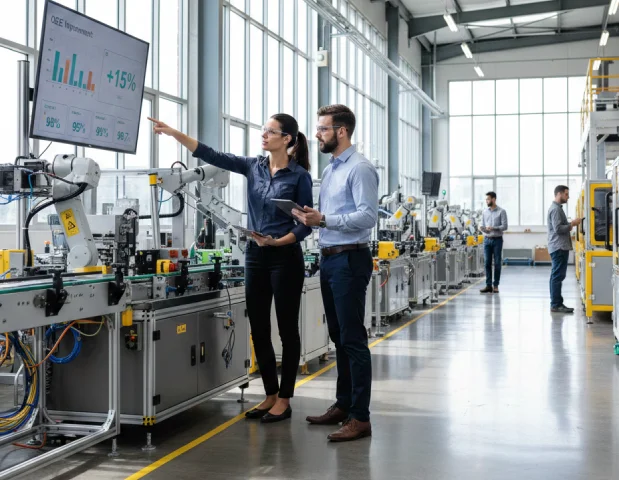
OEE (Overall Equipment Effectiveness) Improvement in India
OEE (Overall Equipment Effectiveness) measures and enhances equipment productivity across availability, performance, and quality. In high-volume manufacturing environments, hidden inefficiencies, such as unplanned downtime, speed losses, and quality defects can reduce effective capacity by 20–40%. With rising cost pressures and increasing global competition, manufacturers in India are prioritizing OEE-driven performance improvement to maximize output without additional capital investment.
India’s National Productivity Council highlights OEE improvement as one of the highest-return productivity interventions for manufacturers. This is particularly critical for facilities operating under Production Linked Incentive (PLI) schemes, where defined production targets must be consistently achieved within annual timelines.
IMARC Engineering provides OEE improvement services in India through structured baseline assessment, loss analysis, and data-driven performance optimization. We identify key production losses across availability, performance, and quality, and implement targeted solutions including downtime reduction, cycle time optimization, defect control, and Total Productive Maintenance (TPM) frameworks. Our approach integrates real-time data tracking, root cause analysis, and operator training to ensure sustainable improvements across batch, continuous, and automated manufacturing environments. This enables manufacturers to unlock hidden capacity, improve production efficiency, reduce waste, and achieve consistent, high-quality output, driving measurable productivity gains and operational excellence.
Our Structured OEE (Overall Equipment Effectiveness) Improvement Methodology
Our systematic performance optimization framework addresses availability, performance, and quality dimensions comprehensively. This proven four-phase methodology identifies hidden losses, implements targeted improvements, and establishes sustainable performance management systems aligned with operational excellence objectives.
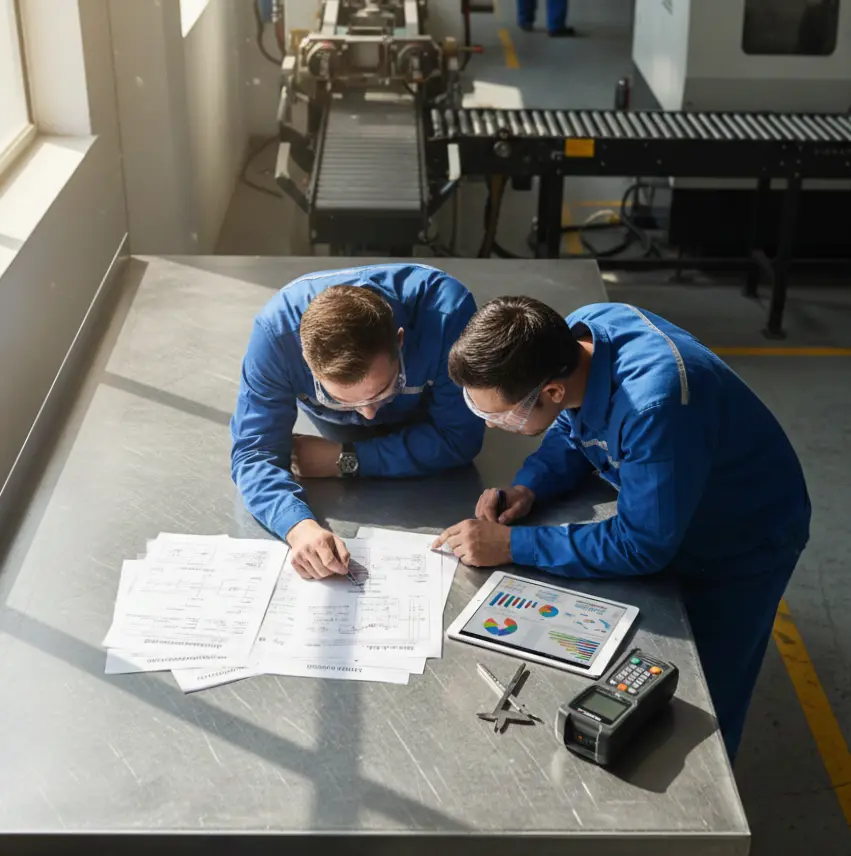

Baseline Assessment & Loss Analysis
Measuring current OEE performance, identifying availability losses, performance inefficiencies, and quality defects through systematic data collection and root cause analysis.

Improvement Initiative Development & Prioritization
Developing targeted improvement actions addressing major loss categories, prioritizing initiatives based on impact potential, and establishing implementation roadmaps with clear responsibilities.

Implementation & Change Management
Executing improvement initiatives including preventive maintenance, quick changeover techniques, operator training, quality enhancements, and process optimization while managing organizational change effectively.

Performance Monitoring & Continuous Improvement
Establishing real-time performance tracking, implementing visual management systems, conducting regular reviews, and fostering continuous improvement culture sustaining OEE gains long-term.
Why Choose IMARC Engineering for OEE Improvement in India?
Our comprehensive OEE optimization services combine analytical rigor, technical expertise, and change management capabilities to deliver measurable productivity improvements. This integrated approach addresses equipment losses, operational inefficiencies, and organizational capabilities, unlocking capacity without requiring capital investment..

Structured Loss Quantification
OEE programmes that start with solutions instead of measurement often focus on visible losses like breakdowns and changeovers, while missing larger hidden losses such as minor stoppages and speed reductions. These “invisible” losses frequently represent the biggest productivity drain in Indian manufacturing. IMARC Engineering begins with structured baseline measurement using the Six Big Losses framework, quantifying each loss in financial terms and prioritising interventions based on highest return, ensuring effort is directed where maximum capacity recovery is achievable.

PLI Scheme Production Target Achievement
PLI-linked manufacturing facilities face direct financial risk if OEE falls below the level required to meet production commitments. Gaps in availability, performance, or quality translate into missed output and potential loss of incentives. IMARC Engineering aligns OEE improvement programmes with specific PLI targets, quantifying the gap, identifying the highest-impact losses, and prioritising interventions that unlock required capacity within the performance timeline.

India-Specific Loss Analysis
Standard OEE methodologies from Europe and Japan often miss India-specific loss drivers. Power quality issues, raw material variability, and multi-shift workforce dynamics create additional availability and performance losses not captured in global benchmarks. IMARC Engineering adapts OEE analysis to Indian conditions, identifying these unique loss drivers and designing targeted interventions that reflect actual operating realities.

Total Productive Maintenance Implementation
Isolated technical fixes deliver short-term OEE gains, but without organisational discipline, performance typically regresses. Total Productive Maintenance (TPM) sustains improvement by embedding operator-led maintenance, cross-functional teams, structured skill development, and visible performance tracking across the organisation. IMARC Engineering implements TPM frameworks tailored to Indian manufacturing realities, aligning with workforce capability, shift structures, and maintenance maturity, ensuring practical adoption and long-term OEE stability rather than temporary gains.

Real-Time OEE Data Infrastructure
OEE programmes based on manual data collection often produce biased and incomplete results, as reporting is influenced by performance targets and misses minor losses. IMARC Engineering addresses this by implementing real-time OEE data systems using machine signals, sensors, and automated production tracking. This enables accurate, unbiased measurement, captures losses at a granular level, and provides reliable data for effective root cause analysis and sustained improvement.

Capability Building and Operator Engagement
OEE gains driven only by external intervention are rarely sustained, performance typically declines once the programme ends. IMARC Engineering embeds capability building into every engagement, training supervisors in OEE analysis, coaching teams in maintenance practices, and establishing routine performance reviews. This ensures internal ownership of improvement, with follow-up reviews to confirm that gains are sustained independently.
OEE Improvement Across Key Sectors in India
IMARC Engineering delivers structured OEE baseline measurement, Six Big Losses analysis, TPM framework implementation, real-time data infrastructure, and PLI scheme production target capability assessment across India’s most active manufacturing sectors.
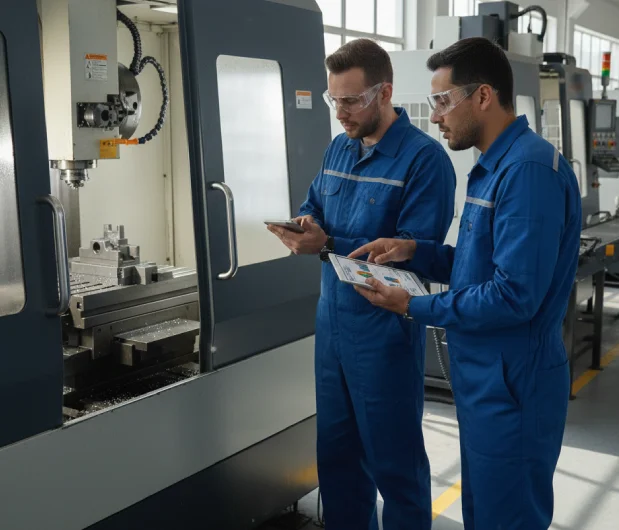
OEE improvement for pharmaceutical manufacturing equipment across Hyderabad, Baddi, and Ahmedabad clusters. PLI scheme incremental production threshold capability gap analysis, CDSCO GMP-compliant downtime categorisation and loss recording, tablet press and capsule filler OEE improvement targeting speed and quality losses, changeover time reduction for multi-product facilities, and TPM autonomous maintenance implementation within Schedule M GMP constraints.
OEE improvement for food processing lines across agricultural processing zones in Punjab, Maharashtra, and Karnataka. PLI food processing scheme production threshold achievement capacity analysis, filling and packaging line minor stoppage elimination, seasonal raw material quality variability impact on speed loss, changeover reduction for multi-SKU production, and real-time OEE tracking for continuous-operation dairy processing lines.
OEE improvement for chemical manufacturing operations in Gujarat’s Dahej, Ankleshwar, and Vapi corridors. Batch cycle time loss analysis and reduction, reaction yield improvement through process parameter stability, planned shutdown optimisation for IBR inspection-driven outages, utility quality impact assessment on equipment availability, and TPM implementation for corrosive service rotating equipment maintenance.
OEE improvement for high-speed FMCG filling and packaging lines. Minor stoppage elimination on continuous-operation packaging lines, speed loss root cause analysis for multi-format filling equipment, changeover SMED analysis for multi-SKU FMCG production, first-pass quality yield improvement, and real-time OEE data collection system implementation for parallel packaging line performance comparison.
OEE improvement for agrochemical manufacturing operations. Technical grade synthesis batch yield and cycle time improvement, formulation line OEE baseline measurement and loss quantification, seasonal production concentration period capacity maximisation, downtime reduction for mechanical seal and pump failures in corrosive service, and PLI-adjacent production commitment capability assessment.
OEE improvement for medical device manufacturing operations. ISO 13485-compliant OEE loss recording and root cause documentation, precision manufacturing equipment availability improvement, quality yield enhancement for high-specification dimensional conformance requirements, PLI medical devices scheme production threshold OEE gap analysis, and TPM implementation within ISO 13485 change control and equipment validation management frameworks.
OEE improvement for heavy industrial manufacturing in MIDC, GIDC, and SIDCO facilities. CNC machine tool OEE baseline measurement and cycle time optimisation, heat treatment furnace availability improvement through planned maintenance alignment, multi-machine cell utilisation improvement through scheduling optimisation, first-pass quality yield improvement for precision machining operations, and BEE energy efficiency improvement through OEE-linked energy loss elimination.
Explore Related Services
Productivity Benchmarking and Optimization
Process Optimization and Lean Consulting
Automation and Digital Monitoring Setup
Trusted by Industry Leaders
We partner with global enterprises and ambitious businesses across sectors to deliver operational excellence, strategic insights, and sustainable growth through integrated solutions.









Success in Their Words
Real feedback from clients across industries. Discover how our solutions delivered measurable impact and operational excellence.

I wanted to express my sincere appreciation for your efforts in handling this matter. Your dedication and commitment have been truly commendable, and it is evident that you have put in tremendous hard work and expertise into resolving the issues at hand. We are greatly interested in continuing our collaboration with you in the future, as your professionalism and reliability have made you a trusted partner. Thank you once again for your invaluable contribution. We look forward to strengthening our partnership ahead.

It has been a pleasure working with the IMARC team. The insights provided were structured, clear, and highly valuable, helping us strengthen both our technical and financial planning with confidence. We deeply appreciate the team’s professionalism, responsiveness, and attention to detail throughout the engagement. Every requirement was well understood and effectively incorporated, resulting in a comprehensive and actionable output. Overall, our experience has been excellent, and I would gladly recommend IMARC to organizations seeking a reliable research partner.

Your service is truly exceptional. Working with the IMARC team has been a seamless and professional experience. The clarity of communication, responsiveness to queries, and consistent support at every stage made the entire engagement highly efficient. The insights shared were well-structured, practical, and perfectly aligned with our requirements, helping us make informed decisions with confidence. Overall, the dedication and professionalism demonstrated by your team stand out, and I would be glad to recommend IMARC as a reliable and trustworthy research partner.

IMARC did an outstanding job in preparing our study. They were punctual, precise, and consistently responsive throughout the entire process. The team delivered all the data we required in a clear, well-organized, and highly professional format. Their strong attention to detail, combined with their ability to meet every deadline without compromising quality, truly set them apart. Overall, their reliability and commitment made them an exceptional partner for our project, and we would gladly work with them again in the future.

IMARC made the whole process incredibly easy from start to finish. Everyone I interacted with via email was polite, professional, and straightforward to deal with, always keeping their promises regarding delivery timelines and remaining consistently solutions-focused. From my very first contact, I appreciated the professionalism and support shown by the entire IMARC team. I highly recommend IMARC to anyone seeking timely, affordable, and reliable information or advice. My experience with IMARC was excellent, and I truly cannot fault any aspect of it.

I’d like to express my sincere gratitude for the excellent work you accomplished with the study. Your ability to quickly understand our requirements and deliver high-quality results under tight timelines truly reflects your expertise, exceptional work ethic, and unwavering commitment to your customer’s success. The professionalism and responsiveness you demonstrated throughout the process made a significant difference. Our entire team and company are incredibly thankful for your dedication, reliability, and support. Once again, thank you for your outstanding contribution.
Frequently Asked Questions: OEE Improvement in India
We have compiled answers to the most common questions investors, operations leaders, and plant managers ask about OEE improvement initiatives. These insights address critical concerns around investment requirements, expected returns, implementation timelines, and sustainable performance management.
Speak to Our OEE Improvement Team
Whether you are a manufacturer or investor, IMARC Engineering delivers structured OEE improvement and capacity optimisation support across sectors. This includes GMP-aligned performance improvement with Central Drugs Standard Control Organization, production loss analysis, TPM implementation, and real-time performance tracking. Our approach enables measurable OEE gains, unlocks hidden capacity, reduces costs, and supports achievement of PLI production commitments.