Comprehensive Operational Verification and Efficiency Assurance Services
Ensure design-aligned performance and operational reliability with structured post-commissioning validation in India, covering performance testing, compliance verification, and process optimization for stable and efficient plant operations.
Contact Us

Post-Commissioning Performance Validation in India
Post-commissioning performance validation in India ensures that newly commissioned or upgraded manufacturing facilities operate as designed under real-world conditions. It verifies that equipment, systems, and processes consistently meet performance benchmarks, safety standards, and efficiency targets defined during design and commissioning. Without structured validation, facilities often face hidden inefficiencies, energy losses, and compliance risks. Industry estimates suggest that 15–25% of newly commissioned plants experience performance gaps during initial operations due to calibration errors, process variability, and system integration issues.
IMARC Engineering provides post-commissioning performance validation services in India through structured testing, data-driven audits, and engineering-led assessments. We evaluate equipment capability, process stability, energy efficiency, and environmental compliance to identify deviations from expected performance. Our approach integrates performance testing, calibration verification, and process optimization to ensure reliable system operation and consistent product quality, enabling manufacturers to confirm production readiness, reduce operational risks, and achieve stable, efficient performance before full-scale operations.
Our Structured Post-Commissioning Performance Validation Methodology
Our validation process follows a structured, data-driven approach that verifies equipment functionality, process accuracy, and system reliability. It ensures complete performance assurance, enabling smooth transition from commissioning to stable, compliant operation.

Operational Readiness Assessment
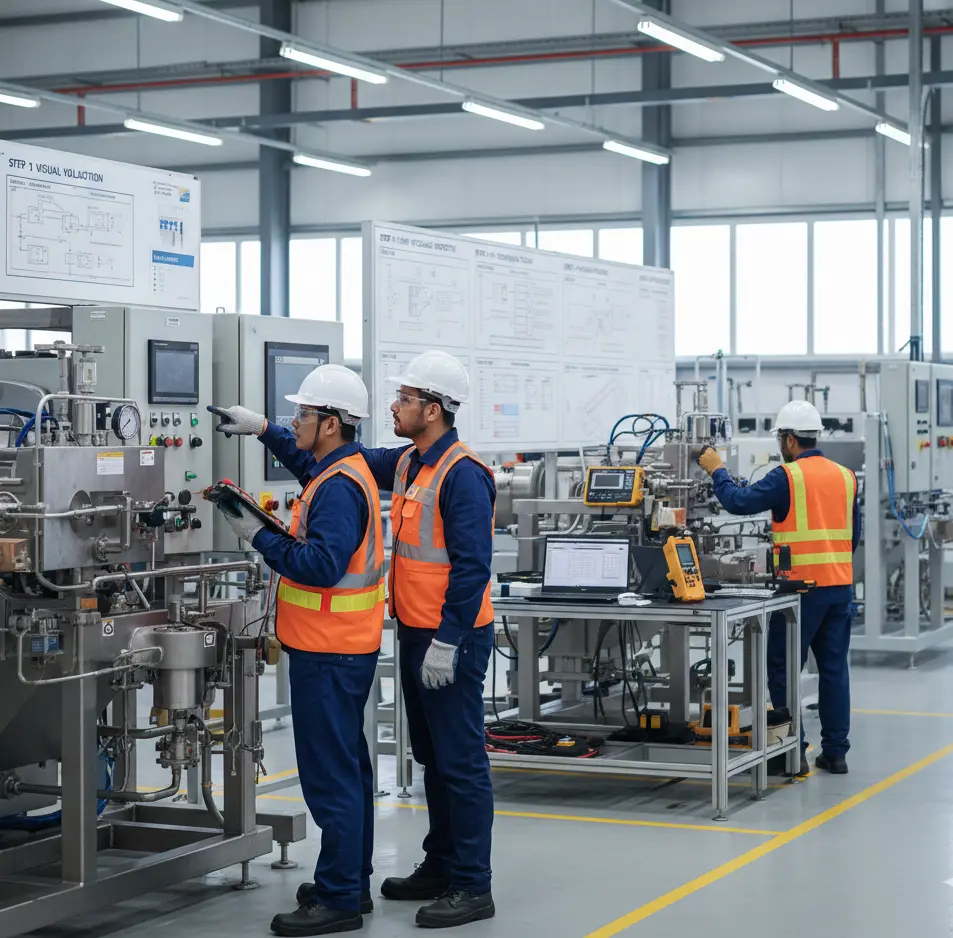
We assess system functionality, equipment calibration, and control logic to verify operational readiness, ensuring safe, accurate, and stable equipment performance before continuous production begins.

Performance Benchmark Testing
We measure throughput, efficiency, and quality metrics under real conditions, comparing results with design expectations to confirm reliability, compliance, and optimal performance consistency.

Root Cause Analysis and Optimization
We identify inefficiencies and deviations using diagnostic data, implementing corrective actions that enhance reliability, energy efficiency, and operational accuracy for long-term stability.

Compliance and Documentation Review
We compile complete performance documentation, verifying compliance with safety, quality, and environmental standards while providing stakeholders with transparent post-commissioning validation reports.
Why Choose IMARC Engineering for Post-Commissioning Performance Validation in India?
Our validation framework ensures new facilities operate at designed efficiency levels. Through structured testing and optimization, we deliver verified operational performance, reduced downtime, and measurable improvements in productivity, safety, and compliance.

Independent Validation Authority
Post-commissioning performance validation conducted by OEMs or EPC contractors is inherently conflicted, as they have a vested interest in declaring successful outcomes. OEM validation is typically limited to warranty conditions, and EPC validation to contract specifications—both of which may fall short of actual production requirements. IMARC Engineering provides independent validation aligned with the client’s performance targets and regulatory obligations, with no ties to vendors or contractors. This ensures that all findings, gap assessments, and corrective actions are objective and focused solely on achieving true operational readiness.

Regulatory-Aligned Performance Qualification
Post-commissioning performance validation in India’s regulated sectors is both a technical and regulatory exercise, directly impacting licensing and compliance outcomes. Central Drugs Standard Control Organization Schedule M mandates Performance Qualification (PQ) as the final validation stage before pharmaceutical production, while Food Safety and Standards Authority of India requires process validation for critical food equipment. IBR certification is also required for pressure systems. IMARC Engineering designs validation programmes with documentation structured to meet each regulator’s requirements, ensuring inspection readiness and avoiding compliance gaps.

PLI Scheme Production Capability Verification
Manufacturing facilities under PLI schemes must demonstrate actual production capability before entering the performance period, as incentives are based on achieved output—not design capacity. Starting operations without verifying equipment performance against committed product volumes risks missing thresholds and losing incentives. IMARC Engineering conducts post-commissioning validation aligned with the client’s specific PLI product mix and throughput targets, ensuring that equipment can reliably meet quality and volume commitments and enabling a confident start to the PLI performance period.

Energy Performance Validation
Energy performance gaps identified after production start create long-term cost penalties, as even small inefficiencies compound over the facility’s operating life. Early post-commissioning validation allows these gaps to be corrected when they are still due to calibration, configuration, or operational issues rather than design flaws. For facilities regulated under the Perform, Achieve and Trade scheme by the Bureau of Energy Efficiency, underperformance against specific energy consumption targets can also lead to compliance costs. IMARC Engineering validates energy use against design benchmarks and regulatory norms, identifying root causes and enabling timely corrective action without disrupting operations.

Environmental Performance Verification
Environmental performance must be validated under real operating conditions before the first regulatory inspection to avoid compliance risks. Effluent quality, air emissions, and noise levels must meet consent limits set by CPCB and state PCBs; failure such as ETP underperformance can trigger violations or even production suspension. IMARC Engineering conducts post-commissioning environmental validation under representative production loads, testing ETP, emission control, and noise systems to identify gaps early and enable corrective action before formal inspections.

Structured Corrective Action Management
Performance validation without structured follow-through delivers limited value, as identified gaps often remain unresolved. IMARC Engineering manages the full validation-to-closure cycle, covering testing, root cause analysis, corrective action implementation, and verified re-testing. Each finding is tracked in a corrective action register with clear ownership, timelines, and closure criteria. The programme is only completed once all critical issues are resolved with evidence, ensuring a defensible performance baseline for regulatory inspections, PLI compliance, and lender requirements.
Post-Commissioning Performance Validation Across Key Sectors in India
IMARC Engineering delivers independent performance qualification, equipment capability testing, energy and environmental compliance verification, PLI commitment capability assessment, and corrective action management across India’s most active manufacturing sectors.
Performance Qualification execution for pharmaceutical manufacturing equipment under CDSCO Schedule M and WHO-GMP standards across Hyderabad, Baddi, and Ahmedabad clusters. PQ documentation structured for CDSCO manufacturing licence applications, process stability testing across product range under PLI scheme commitment mix, cleanroom HVAC PQ including airflow, pressure cascade, and temperature uniformity, and lender draw-down production readiness milestone verification.
Performance validation for food processing equipment including pasteuriser, UHT, filling, and cold chain system performance testing under FSSAI and HACCP requirements. Critical control point performance verification under commercial production loading, PLI food processing scheme production capability assessment, energy performance benchmarking against designed utility consumption, and FSSAI environmental compliance testing for effluent and noise standards at production-representative conditions.
Performance validation for chemical manufacturing equipment in Gujarat’s Dahej, Ankleshwar, and Vapi industrial corridors. Reaction yield and conversion performance testing at design capacity, IBR pressure system performance certification, PESO safety system functional verification under production conditions, CPCB effluent and emission performance testing against Consent to Operate standards, and energy performance validation against BEE PAT scheme specific energy consumption targets.
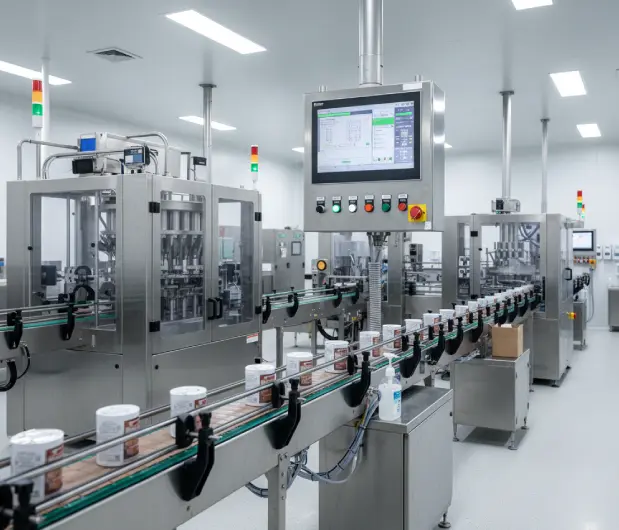
Performance validation for high-speed filling, packaging, and labelling line performance against client technical specification acceptance criteria. CDSCO cosmetics facility performance documentation for manufacturing licence, filling accuracy and reject rate performance testing across product range, energy consumption benchmarking for high-speed packaging line operations, and lender draw-down condition production milestone performance evidence preparation.
Performance validation for agrochemical synthesis and formulation equipment. Technical grade yield and purity performance testing against CIB&RC-registered product specifications, PESO safety interlock functional verification under production conditions, CPCB effluent quality performance testing for ZLD-mandated facilities in notified chemical zones, and environmental monitoring system calibration and performance verification against state PCB Consent to Operate conditions.
Performance Qualification execution for medical device manufacturing equipment under ISO 13485 process validation requirements and CDSCO Class B and C device licence standards. PQ documentation structured for CDSCO licence applications and CE marking technical file requirements, cleanroom performance qualification including particulate and microbial monitoring baseline establishment, precision manufacturing dimensional conformance capability testing, and PLI medical devices scheme production capability verification.
Performance validation for industrial manufacturing equipment including CNC machine tool dimensional accuracy and throughput capability testing, heat treatment process uniformity verification, and surface finishing system performance testing. BEE energy efficiency norm compliance verification for energy-intensive process equipment, Factory Act occupancy performance documentation, and lender draw-down production milestone evidence preparation for industrial project finance in MIDC, GIDC, and SIDCO industrial zones.
Explore Related Services
Production Ramp-Up Monitoring
Pilot Plant Setup and Evaluation
Equipment Relocation and Reinstallation
Decommissioning and Site Closure Support
Trusted by Industry Leaders
We partner with global enterprises and ambitious businesses across sectors to deliver operational excellence, strategic insights, and sustainable growth through integrated solutions.










Success in Their Words
Real feedback from clients across industries. Discover how our solutions delivered measurable impact and operational excellence.

I wanted to express my sincere appreciation for your efforts in handling this matter. Your dedication and commitment have been truly commendable, and it is evident that you have put in tremendous hard work and expertise into resolving the issues at hand. We are greatly interested in continuing our collaboration with you in the future, as your professionalism and reliability have made you a trusted partner. Thank you once again for your invaluable contribution. We look forward to strengthening our partnership ahead.

It has been a pleasure working with the IMARC team. The insights provided were structured, clear, and highly valuable, helping us strengthen both our technical and financial planning with confidence. We deeply appreciate the team’s professionalism, responsiveness, and attention to detail throughout the engagement. Every requirement was well understood and effectively incorporated, resulting in a comprehensive and actionable output. Overall, our experience has been excellent, and I would gladly recommend IMARC to organizations seeking a reliable research partner.

Your service is truly exceptional. Working with the IMARC team has been a seamless and professional experience. The clarity of communication, responsiveness to queries, and consistent support at every stage made the entire engagement highly efficient. The insights shared were well-structured, practical, and perfectly aligned with our requirements, helping us make informed decisions with confidence. Overall, the dedication and professionalism demonstrated by your team stand out, and I would be glad to recommend IMARC as a reliable and trustworthy research partner.

IMARC did an outstanding job in preparing our study. They were punctual, precise, and consistently responsive throughout the entire process. The team delivered all the data we required in a clear, well-organized, and highly professional format. Their strong attention to detail, combined with their ability to meet every deadline without compromising quality, truly set them apart. Overall, their reliability and commitment made them an exceptional partner for our project, and we would gladly work with them again in the future.

IMARC made the whole process incredibly easy from start to finish. Everyone I interacted with via email was polite, professional, and straightforward to deal with, always keeping their promises regarding delivery timelines and remaining consistently solutions-focused. From my very first contact, I appreciated the professionalism and support shown by the entire IMARC team. I highly recommend IMARC to anyone seeking timely, affordable, and reliable information or advice. My experience with IMARC was excellent, and I truly cannot fault any aspect of it.

I’d like to express my sincere gratitude for the excellent work you accomplished with the study. Your ability to quickly understand our requirements and deliver high-quality results under tight timelines truly reflects your expertise, exceptional work ethic, and unwavering commitment to your customer’s success. The professionalism and responsiveness you demonstrated throughout the process made a significant difference. Our entire team and company are incredibly thankful for your dedication, reliability, and support. Once again, thank you for your outstanding contribution.
Frequently Asked Questions: Post-Commissioning Performance Validation in India
We have compiled key insights addressing investor and management concerns about post-commissioning performance validation and its critical role in ensuring operational reliability and efficiency. This section provides clear, investor-focused answers to essential questions, explaining how structured verification improves reliability and ensures compliance.
Speak to Our Post-Commissioning Performance Validation Team
Whether you are a manufacturer or investor, IMARC Engineering provides independent post-commissioning performance validation across equipment, process, utility, and environmental systems. This includes Performance Qualification aligned with Central Drugs Standard Control Organization, compliance validation with Food Safety and Standards Authority of India and CPCB norms, and PLI performance verification—ensuring facilities are fully compliant and production-ready before full-scale operations.