
End-to-End GMP, ISO, FDA, and BIS Compliance in India
Achieve and maintain regulatory compliance across GMP, ISO, FDA, and BIS standards in India through structured guidance that streamlines certification processes and establishes robust quality management systems aligned with Indian and global regulatory requirements.
Contact Us

Regulatory Compliance (GMP, ISO, FDA, BIS) in India
Regulatory Compliance in India is important for manufacturers who want to gain market entry, have their products ready for export, and keep running their business operations in regulated industries including pharmaceuticals, food processing industry, manufacturing of medical devices, and engineering goods. Regulations can be of different types such as Good Manufacturing Practices (GMP), ISO certification standards, FDA guidelines for exports and BIS certification compliance. As a consequence of strict regulatory oversight from organizations like CDSCO, FSSAI, and BIS, non-compliance results in recall of products, restrictions on exports and the risk of closure of the plant by the regulatory body. According to estimates from the industry, almost 30% of the total manufacturing plants in India are not compliant when audited, due to issues related to documentation and inadequate processes.
IMARC Engineering offers regulatory compliance services in India in the form of gap assessment, development of documentation framework and implementation of comprehensive Quality Management Systems (QMS). Our expertise covers GMP compliance, ISO certification, FDA compliance for exports and BIS certification through process validation, SOP development, facility compliance and audit preparation. Our regulatory compliance services include documentation management, employee training, internal auditing, mock audits and continuous improvements.
Our Structured Approach to Regulatory Compliance (GMP, ISO, FDA, BIS)
Our systematic compliance methodology combines regulatory expertise, practical implementation experience, and industry best practices to establish robust quality management systems. This proven approach guarantees thorough preparation for certifications while building sustainable compliance capabilities.


Gap Analysis & Compliance Assessment
Evaluating current operations, documentation systems, and quality practices against regulatory requirements to identify gaps, prioritize remediation activities, and establish compliance roadmaps.

Documentation Development & System Implementation
Creating comprehensive quality management documentation including standard operating procedures, quality manuals, work instructions, and record templates while implementing compliant operational systems.

Training & Organizational Readiness
Developing customized training programs for personnel across all organizational levels, conducting mock audits simulating regulatory inspections, and building compliance culture throughout operations.

Certification Support & Continuous Improvement
Providing inspection preparation support, facilitating auditor interactions, addressing non-conformances, and establishing continuous improvement frameworks, maintaining compliance and enhancing quality performance over time.
Why Choose IMARC Engineering for Regulatory Compliance (GMP, ISO, FDA, BIS) in India?
Our compliance approach combines regulatory expertise, practical implementation experience, and industry knowledge, delivering sustainable quality management systems. This methodology balances regulatory requirements with operational realities, establishing compliance frameworks supporting both certification success and business objectives.

Multi-Framework Compliance Expertise
Indian manufacturers requiring compliance for domestic market access, international market entry, and organizational purchase approval must meet compliance criteria under various regulatory bodies including CDSCO & Schedule M for pharmaceutical GMP compliance, WHO-GMP and US FDA for export markets, FSSAI for food manufacturing, BIS for mandatory product certifications, ISO 9001 & 13485 for quality management systems certification, as well as other sector-specific criteria built upon these foundation stones. Compliance to each of these bodies individually results in inconsistencies in documentation, duplication of auditing procedures, and inadequate certifications, leading not only to lack of market access but operational inefficiencies as well. IMARC Engineering incorporates multi-body compliance within its quality management systems by structuring the documentation process, training procedures, and operations according to the criteria of each body in such a way that no separate system is formed from the production reality.

Gap Assessment Methodology
Over 30% of Indian manufacturing plants are found to be lacking in compliance during the first regulatory inspections, deficiencies which go unnoticed due to the lack of systematic internal compliance review by employees who have been working inside the plant and therefore have become blind to the non-compliance issues that an experienced external auditor can spot right away. IMARC Engineering offers compliance gap assessment services based on the criteria that would be used by the target regulatory agency such as CDSCO's inspection checklists for Pharmaceutical GMP; WHO-GMP audit checklist for compliance with exports markets; US FDA 21 CFR Part 211 criteria for FDA-registered plants; and BIS product certification checklists for mandatory certification categories.

Documentation System Development
Inadequate documentation is the number one reason for compliance observations in India’s manufacturing sector. Not because Indian manufacturers do not have their documentation systems in place; the problem lies in the way that they are designed in terms of production convenience and not regulatory compliance needs. IMARC Engineering creates documentation systems based on regulatory documentation standards – SOPs reflecting actual practice and not just theoretical procedures, batch records reflecting critical quality attributes required by GMP, validation master documents adhering to the necessary standards and format, and quality system documentation proving the presence of an effective QMS. The strength of this documentation system keeps Indian manufacturers in compliance during inspections and external audits without scrambling last minute to document their processes and practices.

Process Validation and Qualification Programme Management
Process validation and equipment qualification are some of the most challenging compliance requirements for the pharmaceutical, food, and medical devices industries, involving the provision of IQ, OQ, and PQ documents demonstrating that processes and equipment used in the manufacture of the products consistently provide an output conforming to the specifications. Validation activities done without sufficient regulatory expertise will produce validation documents which pass internal scrutiny but fail external inspection because qualification activities do not cover the process critical to the regulatory authorities, whose validation they demand; acceptance criteria have no scientific basis; or statistical methods are not sufficiently sound enough to show process capability. IMARC Engineering develops validation and qualification activities that comply with ICH Q8, Q9, Q10, and Q11 standards for the pharmaceutical industry, GAMP 5 standards for computerized systems, and ISO 13485 for medical device production, resulting in validation documents capable of passing CDSCO, WHO, and USFDA scrutiny.

Mock Inspection and Audit Readiness Programme
The best way to prepare for inspections and certification audits is through a stringent mock inspection carried out by competent external auditors using the exact same assessment guidelines as those used by the intended regulatory agency, with non-conformities being flagged in enough time to address them before the actual inspection takes place. IMARC Engineering provides mock inspection services based on the requirements of CDSCO, WHO-GMP, US FDA, EU GMP, FSSAI, BIS, and ISO certification audits. This includes an assessment of documentation accuracy and completeness, GMP compliance of the facility, quality management system adoption, training records, and data integrity. The results of the mock inspection are categorized according to their level of severity, corrective measures are planned, and a remediation program prior to the inspection is implemented.

Ongoing Compliance Maintenance and Continuous Improvement
Regulatory compliance is not an outcome of certification; it is a constant discipline which needs constant supervision by management, internal audits from time to time, and efforts towards continual improvement in maintaining the compliance status gained after the successful certification or inspection process. IMARC Engineering offers assistance for regulatory compliance maintenance through periodic internal auditing programs, CAPA system management, monitoring of regulatory changes and evaluating their implications for the existing quality systems, managing change control related to any facility or process or documentation changes, and management reviews. Such assistance will prevent regulatory compliance drift in the facilities which have been successfully certified but have failed to follow the discipline of quality management.
Regulatory Compliance Services Across Manufacturing Sectors in India
IMARC Engineering delivers regulatory compliance gap assessment, documentation development, and certification preparation across all major regulated manufacturing sectors in India.
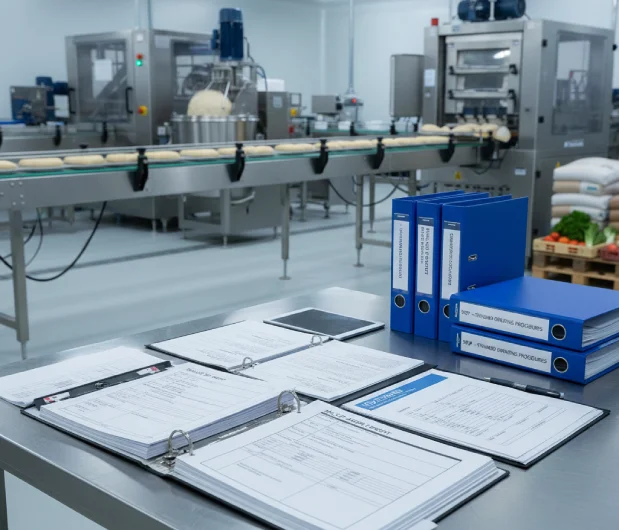
Schedule M and WHO-GMP gap assessment and remediation; CDSCO manufacturing licence documentation; US FDA 21 CFR Part 211 compliance preparation; EU GMP Annex compliance; process validation and equipment qualification programme management; data integrity assessment aligned with ALCOA+ principles; and mock CDSCO and international GMP inspection support.
FSSAI licensing and compliance documentation; HACCP system design and implementation; FSSC 22000 and BRC Global Standard certification preparation; ISO 22000 gap assessment; food safety management system SOP development; allergen management plan implementation; and FSSAI compliance audit readiness for domestic and export market food safety standard requirements.
REACH compliance documentation for European market export; GHS and SDS preparation aligned with IS 16232; PESO licensing documentation for explosive and petroleum product manufacturers; CPCB consent condition compliance; ISO 14001 environmental management system implementation; and process safety management documentation for hazardous chemical manufacturing operations.
CDSCO MDR 2017 registration documentation; ISO 13485 quality management system implementation; CE marking technical file preparation for European market; US FDA 510(k) and 513(f)(2) documentation support; design history file and device master record development; post-market surveillance system implementation; and IEC 60601 and relevant harmonised standard compliance assessment.
BIS certification for mandatory product categories including electrical appliances, helmets, and packaged commodities; CDSCO compliance for cosmetics and over-the-counter products; Legal Metrology Act compliance for pre-packaged products; ISO 9001 QMS implementation; labelling compliance for domestic and export markets; and mock BIS and CDSCO audit preparation to address the 30%+ first-audit gap rate.
BIS mandatory certification documentation for IS standard-governed product categories; CE marking technical documentation for European market; ISO 9001 quality management system implementation and certification preparation; IATF 16949 automotive quality system gap assessment; calibration and measurement system compliance; and export market product safety certification preparation.
Explore Related Services
SOP Compliance and Mock Inspections
Product and Facility Certification Support
CAPA (Corrective and Preventive Action) Support
Trusted by Industry Leaders
We partner with global enterprises and ambitious businesses across sectors to deliver operational excellence, strategic insights, and sustainable growth through integrated solutions.




Success in Their Words
Real feedback from clients across industries. Discover how our solutions delivered measurable impact and operational excellence.

I wanted to express my sincere appreciation for your efforts in handling this matter. Your dedication and commitment have been truly commendable, and it is evident that you have put in tremendous hard work and expertise into resolving the issues at hand. We are greatly interested in continuing our collaboration with you in the future, as your professionalism and reliability have made you a trusted partner. Thank you once again for your invaluable contribution. We look forward to strengthening our partnership ahead.

It has been a pleasure working with the IMARC team. The insights provided were structured, clear, and highly valuable, helping us strengthen both our technical and financial planning with confidence. We deeply appreciate the team’s professionalism, responsiveness, and attention to detail throughout the engagement. Every requirement was well understood and effectively incorporated, resulting in a comprehensive and actionable output. Overall, our experience has been excellent, and I would gladly recommend IMARC to organizations seeking a reliable research partner.
Your service is truly exceptional. Working with the IMARC team has been a seamless and professional experience. The clarity of communication, responsiveness to queries, and consistent support at every stage made the entire engagement highly efficient. The insights shared were well-structured, practical, and perfectly aligned with our requirements, helping us make informed decisions with confidence. Overall, the dedication and professionalism demonstrated by your team stand out, and I would be glad to recommend IMARC as a reliable and trustworthy research partner.

IMARC did an outstanding job in preparing our study. They were punctual, precise, and consistently responsive throughout the entire process. The team delivered all the data we required in a clear, well-organized, and highly professional format. Their strong attention to detail, combined with their ability to meet every deadline without compromising quality, truly set them apart. Overall, their reliability and commitment made them an exceptional partner for our project, and we would gladly work with them again in the future.

IMARC made the whole process incredibly easy from start to finish. Everyone I interacted with via email was polite, professional, and straightforward to deal with, always keeping their promises regarding delivery timelines and remaining consistently solutions-focused. From my very first contact, I appreciated the professionalism and support shown by the entire IMARC team. I highly recommend IMARC to anyone seeking timely, affordable, and reliable information or advice. My experience with IMARC was excellent, and I truly cannot fault any aspect of it.

I’d like to express my sincere gratitude for the excellent work you accomplished with the study. Your ability to quickly understand our requirements and deliver high-quality results under tight timelines truly reflects your expertise, exceptional work ethic, and unwavering commitment to your customer’s success. The professionalism and responsiveness you demonstrated throughout the process made a significant difference. Our entire team and company are incredibly thankful for your dedication, reliability, and support. Once again, thank you for your outstanding contribution.
Frequently Asked Questions: Regulatory Compliance (GMP, ISO, FDA, BIS) in India
We have compiled answers to common questions investors and business leaders ask about regulatory compliance (GMP, ISO, FDA, BIS) services. These insights address certification timelines, investment requirements, operational impacts, and strategic benefits of robust compliance frameworks.
Speak to Our Regulatory Compliance Team
Whether you are a pharmaceutical, food, medical device, chemical, FMCG, or engineering manufacturer, or an exporter, IMARC Engineering delivers end-to-end regulatory compliance support. This includes gap assessment, documentation, and audit readiness aligned with Central Drugs Standard Control Organization, Food Safety and Standards Authority of India, ISO standards, BIS, REACH, and US FDA requirements, ensuring sustained compliance across domestic and international markets.