
Bridging Operational Excellence with Enterprise Intelligence
Transform manufacturing operations through seamless digital documentation and ERP integration that connects shop floor activities with enterprise systems while guaranteeing investor confidence and manufacturing excellence.
Contact Us
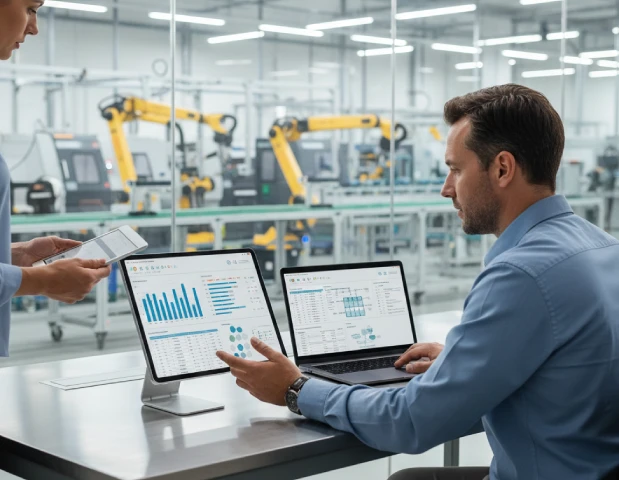
Digital Documentation & ERP Integration
IMARC Engineering provides comprehensive digital documentation and ERP integration services that connect manufacturing operations with enterprise resource planning systems, creating unified information ecosystems supporting operational excellence. Our specialized consulting transforms paper-based documentation into digital workflows while establishing seamless data flows between production systems, quality management, inventory control, and financial reporting platforms.
With expertise across leading ERP platforms, including SAP, Oracle, Microsoft Dynamics, and industry-specific solutions, we design and implement integration architectures that eliminate data silos, reduce manual intervention, and deliver real-time operational visibility. Our multidisciplinary team blends manufacturing, IT, and change management for success consistently and effectively.
From batch record digitization and electronic document management to complete ERP implementation and manufacturing execution system integration, we support manufacturers across pharmaceuticals, chemicals, food processing, and industrial sectors in achieving paperless operations that enhance compliance, accelerate decision-making, and strengthen investor confidence through transparent operational data.
Our Strategic Approach to Digital Documentation & ERP Integration
Our systematic integration methodology combines business process analysis, technology architecture design, and change management to deliver successful digital transformation. This proven four-phase framework addresses every critical dimension affecting your digitalization journey and operational effectiveness.


Current State Assessment and Requirements Definition
Evaluating existing documentation workflows, system landscapes, and operational processes to identify integration opportunities, define functional requirements, and establish transformation roadmaps aligned with business objectives.

Solution Design and Architecture Development
Designing comprehensive integration architectures specifying system interfaces, data flows, document repositories, and workflow automation while selecting appropriate technologies supporting scalability and regulatory compliance.

Implementation and System Configuration
Executing technical implementation including ERP configuration, interface development, document digitization, workflow programming, and testing protocols validating functionality, data accuracy, and performance under operational conditions.

Training and Ongoing Optimization Support
Delivering comprehensive user training, managing change adoption, providing post-implementation support, and conducting continuous improvement initiatives optimizing system utilization and identifying enhancement opportunities throughout operational maturity.
Why Choose IMARC for Digital Documentation & ERP Integration
Our integrated digital transformation approach combines technical expertise, operational understanding, and change management excellence to deliver successful outcomes. This comprehensive methodology addresses every dimension affecting your digitalization success and long-term value realization.

Enhanced Operational Visibility and Decision-Making
Achieve real-time operational insights through integrated data flows connecting production, quality, and financial systems. Management teams access accurate information supporting strategic decisions, while investors gain transparent visibility into operational performance across facilities and markets.

Streamlined Compliance and Regulatory Readiness
Strengthen regulatory compliance through electronic records management, audit trails, version control, and data integrity safeguards. Digital documentation systems deliver inspection-ready evidence demonstrating quality management rigor, traceability, and procedural adherence across manufacturing environments.

Substantial Efficiency Gains and Cost Reduction
Eliminate manual data entry, reduce documentation errors, accelerate information retrieval, and minimize administrative overhead through automated workflows. Organizations typically achieve significant productivity improvements translating directly to enhanced profitability.

Scalable Platform Supporting Growth Strategies
Build digital infrastructure accommodating business expansion, capacity increases, and operational complexity growth. Our solutions establish technology foundations supporting multi-site operations, international markets, and product diversification without requiring system replacements.

Manufacturing-Specific Expertise and Best Practices
Leverage our deep manufacturing domain knowledge spanning pharmaceutical GMP requirements, food safety standards, chemical processing protocols, and quality management systems. We understand industry-specific compliance obligations informing appropriate technology solutions.

Comprehensive Change Management and Adoption Support
Navigate organizational transformation through structured change management addressing cultural adaptation, skill development, and stakeholder engagement. Our holistic approach maximizes user adoption, minimizes implementation resistance, and accelerates value realization.
Specialized Digital Documentation & ERP Integration Across Manufacturing Sectors
IMARC Engineering delivers industry-specific digital transformation solutions backed by deep sector knowledge and regulatory expertise. Our understanding of industry-specific compliance requirements, operational workflows, and business processes guarantees relevant, effective integration strategies for your operations.

Pharmaceutical operations require specialized digital systems supporting GMP compliance, electronic batch records, LIMS integration, and unified quality management. Our implementations enable 21 CFR Part 11 adherence, electronic signatures, deviation control, audit trails, and validation documentation while linking formulation, packaging, stability testing, and regulatory workflows with enterprise platforms.
Food processors depend on digital platforms linking recipe management, allergen control, sanitation documentation, and quality testing to enterprise systems. Implemented solutions manage HACCP controls, batch traceability, shelf-life tracking, nutritional labeling, and regulatory compliance while supporting FSMA, organic certification, and modern food safety initiatives.
Chemical manufacturers require tailored digital ecosystems connecting process control, safety documentation, environmental monitoring, and hazardous materials tracking. Our solutions enable batch genealogy, recipe management, SDS administration, environmental reporting, and lab quality control while supporting process safety management frameworks and operational excellence throughout chemical production environments.
Technology companies and electronics manufacturers rely on integrated platforms connecting PLM, engineering change control, component traceability, and configuration management. Implemented systems support serialization, warranty management, field service, and product analytics while linking design, procurement, production, testing, and aftermarket operations across complete technology product lifecycles.
Power generation and renewable facilities benefit from integrated SCADA, asset management, maintenance scheduling, and operational reporting. Implemented systems support emissions tracking, plant performance analytics, equipment reliability, regulatory reporting, and real-time monitoring while maintaining redundancy, cybersecurity protections, and operational continuity across diverse energy infrastructures.
Agro-processing operations benefit from digitalization that links harvest tracking, quality grading, cold-storage controls, and food safety documentation with enterprise applications. Our solutions enable farm-to-product traceability, organic certification support, testing protocols, HACCP alignment, and export documentation while strengthening sustainability reporting across agricultural supply chains.
Automotive manufacturers require integrated platforms connecting production planning, quality inspections, supplier systems, and logistics coordination with enterprise applications. Implemented solutions support IATF 16949 compliance, APQP, PPAP, control plans, and MSA while enabling just-in-time production, supply chain visibility, and continuous improvement across automotive operations.
Warehousing and logistics operations rely on unified systems integrating WMS, transportation and yard management, and inventory optimization with ERP platforms. Our implementations improve receiving accuracy, picking efficiency, shipping documentation, and cross-docking while enabling 3PL integration, multi-channel fulfillment, and real-time visibility across distribution networks.
Digital transformation for manufacturing operations integrates MES, quality systems, maintenance tools, and inventory control with enterprise ERP platforms. Our solutions enhance production scheduling, work order execution, material traceability, equipment monitoring, and performance analytics, strengthening lean initiatives and continuous improvement across varied manufacturing environments.
Trusted by Industry Leaders
We partner with global enterprises and ambitious businesses across sectors to deliver operational excellence, strategic insights, and sustainable growth through integrated solutions.




Success in Their Words
Real feedback from clients across industries. Discover how our solutions delivered measurable impact and operational excellence.

I wanted to express my sincere appreciation for your efforts in handling this matter. Your dedication and commitment have been truly commendable, and it is evident that you have put in tremendous hard work and expertise into resolving the issues at hand. We are greatly interested in continuing our collaboration with you in the future, as your professionalism and reliability have made you a trusted partner. Thank you once again for your invaluable contribution. We look forward to strengthening our partnership ahead.
It has been a pleasure working with the IMARC team. The insights provided were structured, clear, and highly valuable, helping us strengthen both our technical and financial planning with confidence. We deeply appreciate the team’s professionalism, responsiveness, and attention to detail throughout the engagement. Every requirement was well understood and effectively incorporated, resulting in a comprehensive and actionable output. Overall, our experience has been excellent, and I would gladly recommend IMARC to organizations seeking a reliable research partner.
Your service is truly exceptional. Working with the IMARC team has been a seamless and professional experience. The clarity of communication, responsiveness to queries, and consistent support at every stage made the entire engagement highly efficient. The insights shared were well-structured, practical, and perfectly aligned with our requirements, helping us make informed decisions with confidence. Overall, the dedication and professionalism demonstrated by your team stand out, and I would be glad to recommend IMARC as a reliable and trustworthy research partner.

IMARC did an outstanding job in preparing our study. They were punctual, precise, and consistently responsive throughout the entire process. The team delivered all the data we required in a clear, well-organized, and highly professional format. Their strong attention to detail, combined with their ability to meet every deadline without compromising quality, truly set them apart. Overall, their reliability and commitment made them an exceptional partner for our project, and we would gladly work with them again in the future.

IMARC made the whole process incredibly easy from start to finish. Everyone I interacted with via email was polite, professional, and straightforward to deal with, always keeping their promises regarding delivery timelines and remaining consistently solutions-focused. From my very first contact, I appreciated the professionalism and support shown by the entire IMARC team. I highly recommend IMARC to anyone seeking timely, affordable, and reliable information or advice. My experience with IMARC was excellent, and I truly cannot fault any aspect of it.
I’d like to express my sincere gratitude for the excellent work you accomplished with the study. Your ability to quickly understand our requirements and deliver high-quality results under tight timelines truly reflects your expertise, exceptional work ethic, and unwavering commitment to your customer’s success. The professionalism and responsiveness you demonstrated throughout the process made a significant difference. Our entire team and company are incredibly thankful for your dedication, reliability, and support. Once again, thank you for your outstanding contribution.
Frequently Asked Questions
We’ve compiled answers to the most common questions investors, facility managers, and business leaders ask about digital documentation and ERP integration. These insights address critical concerns around implementation approaches, investment requirements, operational benefits, etc.
Ready to Transform Your Operations with Digital Documentation?
Contact our digital transformation specialists today to discuss your integration requirements and discover how IMARC Engineering can deliver seamless digital documentation and ERP solutions supporting operational excellence.