
Protect Your Workforce Through Proactive Safety Excellence
Safeguard employees and operations through comprehensive health and safety compliance audits that identify hazards, strengthen protection systems, and establish robust workplace safety programs meeting regulatory standards.
Contact Us
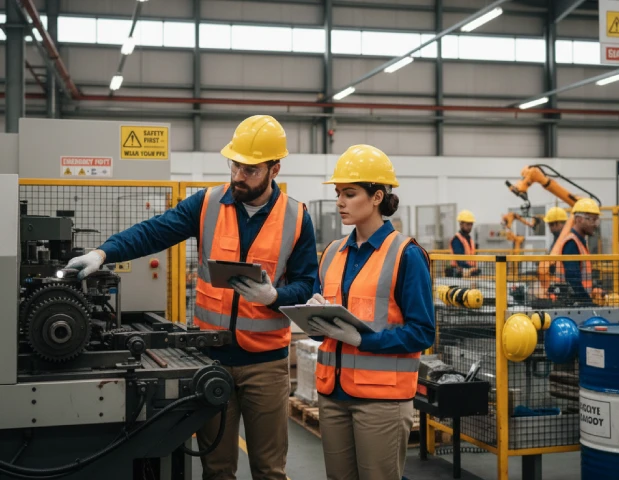
Health and Safety Compliance Audits
IMARC Engineering delivers audits that help manufacturers build strong workplace safety programs that protect employees while meeting required regulations. With expertise across sectors, we provide strategic safety solutions that address occupational hazards, operational risks, and compliance needs.
Our team of safety engineers, industrial hygienists, and compliance specialists conducts detailed evaluations of facility conditions, operational practices, emergency readiness, documentation systems, and organizational safety culture. We identify hazards ranging from chemical exposure to ergonomic risks, assess control effectiveness, review regulatory compliance, and create prioritized improvement roadmaps that strengthen worker protection.
From baseline safety assessments to full occupational health and safety management system implementation, we support manufacturers navigating complex regulatory expectations while building prevention-focused cultures. Our services include hazard surveys, compliance gap analysis, safety system development, training design, emergency response planning, and continuous improvement frameworks that enable sustainable safety performance, workforce engagement, and measurable reductions in incidents across operations globally.
Our Comprehensive Approach to Health and Safety Compliance Audits
Our systematic methodology combines facility inspections, documentation reviews, employee interviews, and risk assessments to evaluate workplace safety comprehensively. This approach guarantees thorough identification of hazards, compliance gaps, and improvement opportunities while building organizational capabilities.


Facility Inspection & Hazard Identification
Conducting detailed facility walkthroughs examining machinery, work areas, chemical storage, electrical systems, and operational practices to identify safety hazards and compliance deficiencies.

Regulatory Compliance Assessment & Documentation Review
Evaluating compliance with applicable regulations, reviewing safety documentation including permits and training records, and assessing management system effectiveness against regulatory requirements.

Risk Evaluation & Control Effectiveness Analysis
Assessing risk severity and likelihood for identified hazards, evaluating existing control measures, determining residual risks, and prioritizing remediation based on risk levels.

Improvement Planning & Implementation Support
Developing prioritized action plans with specific recommendations, providing implementation guidance, establishing monitoring mechanisms, and building organizational capabilities for continuous safety improvement.
Why Choose IMARC for Health and Safety Compliance Audits
Our comprehensive approach combines technical expertise, regulatory knowledge, and practical implementation experience, delivering actionable improvements. This balances regulatory compliance with operational realities while building safety cultures where worker protection becomes embedded in organizational values.

Multidisciplinary Safety Expertise
Benefit from integrated knowledge spanning industrial hygiene, process safety, occupational health, fire protection, and regulatory compliance. Our cross-functional expertise identifies diverse hazards requiring specialized evaluation beyond basic safety inspections.

Industry-Specific Hazard Recognition
Leverage deep understanding of sector-specific workplace hazards across pharmaceuticals, chemicals, food processing, and manufacturing industries. Our specialists recognize unique risks inherent to your operations that generic auditors might overlook.

Practical Risk-Based Prioritization
Receive prioritized improvement roadmaps focusing resources on highest-risk exposures delivering maximum worker protection. We balance ideal solutions with practical constraints, recommending cost-effective controls achieving meaningful risk reduction.

Comprehensive Regulatory Coverage
Navigate complex regulatory landscapes encompassing OSHA standards, EPA requirements, state regulations, industry-specific rules, and international safety standards. Our audits identify compliance gaps across all applicable regulatory frameworks.

Culture Transformation Support
Build proactive safety cultures extending beyond compliance checklists. We develop leadership engagement strategies, employee participation programs, and safety initiatives, transforming safety from regulatory obligation into commitment and worker ownership.

Incident Prevention & Loss Reduction
Reduce workplace injuries, illnesses, and associated costs through systematic hazard elimination and risk mitigation. Our proactive audit approach prevents incidents rather than merely investigating them, protecting both employees and business operations.
Health and Safety Compliance Audit Expertise Across Industrial Manufacturing Sectors
IMARC Engineering develops industry-specific health and safety compliance audits addressing unique workplace hazards, regulatory requirements, and operational risks. Our sector expertise guarantees safety evaluations recognize industry-specific exposures while supporting both regulatory compliance and genuine worker protection.
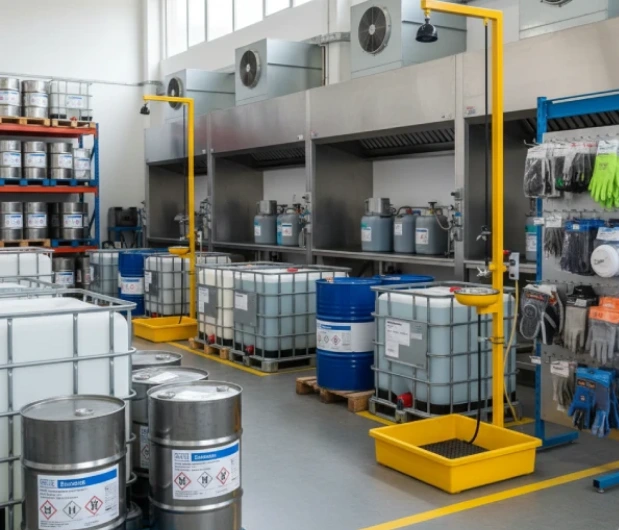
Audits addressing potent compound handling, cleanroom safety, chemical and biological exposures, solvent use, waste management, respiratory protection, containment systems, PPE, and emergency procedures, helping pharmaceutical facilities maintain worker health while meeting GMP and safety regulations.
Audits addressing ammonia refrigeration, lockout/tagout, machine guarding, sanitation chemicals, ergonomic risks, industrial vehicles, confined spaces, and allergen controls while evaluating slip hazards, thermal risks, knife safety, PPE, contractor oversight, and emergency readiness.
Audits addressing process safety management, hazardous chemical handling, reactive materials, pressure vessels, exposure controls, emergency readiness, waste management, and industrial hygiene while reviewing hazard analyses, mechanical integrity, change management, and training programs strengthening multi-layered protection.
Audits addressing cleanroom safety, chemical handling, ergonomic risks, semiconductor radiation safety, waste management, emergency response, and occupational health programs while evaluating laser safety, electromagnetic exposure, solvent vapor control, electrostatic discharge risks, and facility safety systems.
Audits covering electrical safety, arc flash risks, confined spaces, work at heights, hot work, high-energy lockout/tagout, emergency planning, and contractor safety while evaluating boilers, turbines, substations, and high-voltage practices to support reliable and safe operations.
Audits covering pesticide handling, equipment hazards, grain operations, confined spaces, heat stress, vehicle safety, chemical storage, and emergency response while assessing rollover protection, PTO guarding, livestock safety, respiratory protection, and worker training across agricultural environments.
Audits addressing robotics, welding, paint booths, ergonomics, material handling, presses, machine guarding, lockout/tagout, chemical exposures, industrial vehicles, battery handling, and emergency readiness to maintain safe automotive manufacturing aligned with OEM expectations.
Audits covering construction safety, fall protection, excavation hazards, cranes and rigging, vehicle safety, material handling, hot work, electrical risks, confined spaces, and silica controls while reviewing contractor management, inspections, and emergency planning for safe project execution.
Safety audits covering machine guarding, lockout/tagout, material handling, ergonomics, noise, industrial vehicles, compressed gases, electrical safety, fall protection, confined spaces, respiratory programs, and emergency readiness, enabling manufacturers to implement practical hazard controls that support safe, efficient production.
Trusted by Industry Leaders
We partner with global enterprises and ambitious businesses across sectors to deliver operational excellence, strategic insights, and sustainable growth through integrated solutions.
Success in Their Words
Real feedback from clients across industries. Discover how our solutions delivered measurable impact and operational excellence.
I wanted to express my sincere appreciation for your efforts in handling this matter. Your dedication and commitment have been truly commendable, and it is evident that you have put in tremendous hard work and expertise into resolving the issues at hand. We are greatly interested in continuing our collaboration with you in the future, as your professionalism and reliability have made you a trusted partner. Thank you once again for your invaluable contribution. We look forward to strengthening our partnership ahead.
It has been a pleasure working with the IMARC team. The insights provided were structured, clear, and highly valuable, helping us strengthen both our technical and financial planning with confidence. We deeply appreciate the team’s professionalism, responsiveness, and attention to detail throughout the engagement. Every requirement was well understood and effectively incorporated, resulting in a comprehensive and actionable output. Overall, our experience has been excellent, and I would gladly recommend IMARC to organizations seeking a reliable research partner.
Your service is truly exceptional. Working with the IMARC team has been a seamless and professional experience. The clarity of communication, responsiveness to queries, and consistent support at every stage made the entire engagement highly efficient. The insights shared were well-structured, practical, and perfectly aligned with our requirements, helping us make informed decisions with confidence. Overall, the dedication and professionalism demonstrated by your team stand out, and I would be glad to recommend IMARC as a reliable and trustworthy research partner.
IMARC did an outstanding job in preparing our study. They were punctual, precise, and consistently responsive throughout the entire process. The team delivered all the data we required in a clear, well-organized, and highly professional format. Their strong attention to detail, combined with their ability to meet every deadline without compromising quality, truly set them apart. Overall, their reliability and commitment made them an exceptional partner for our project, and we would gladly work with them again in the future.
IMARC made the whole process incredibly easy from start to finish. Everyone I interacted with via email was polite, professional, and straightforward to deal with, always keeping their promises regarding delivery timelines and remaining consistently solutions-focused. From my very first contact, I appreciated the professionalism and support shown by the entire IMARC team. I highly recommend IMARC to anyone seeking timely, affordable, and reliable information or advice. My experience with IMARC was excellent, and I truly cannot fault any aspect of it.
I’d like to express my sincere gratitude for the excellent work you accomplished with the study. Your ability to quickly understand our requirements and deliver high-quality results under tight timelines truly reflects your expertise, exceptional work ethic, and unwavering commitment to your customer’s success. The professionalism and responsiveness you demonstrated throughout the process made a significant difference. Our entire team and company are incredibly thankful for your dedication, reliability, and support. Once again, thank you for your outstanding contribution.
Frequently Asked Questions
We have compiled answers to common questions investors and manufacturing leaders ask about health and safety compliance audits. These insights address audit scope, investment requirements, business benefits, regulatory implications, and strategic value of proactive safety management.
Ready to Strengthen Workplace Safety?
Contact IMARC Engineering today to discuss your safety assessment needs and discover how our health and safety compliance audits can protect your workforce, reduce operational risks, and position your organization for sustained safety excellence.