
Drive Excellence Through Independent Quality Assessment
Strengthen quality management systems through audit services that identify improvement opportunities, verify regulatory compliance, and establish robust quality frameworks supporting operational excellence, customer satisfaction, and continuous improvement.
Contact Us
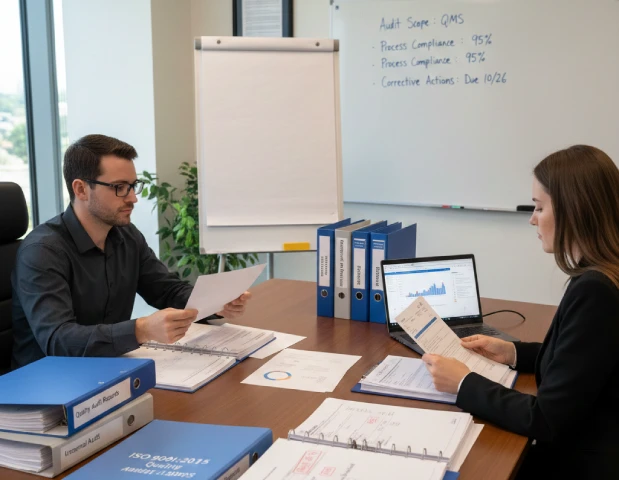
Quality Audit Services
IMARC Engineering delivers quality audit services, helping manufacturers establish robust quality management systems through independent, objective assessments. With extensive expertise across sectors, we provide strategic audit solutions evaluating quality system effectiveness, regulatory compliance, and operational performance against international standards.
Our experienced team of quality auditors, compliance specialists, and industry experts conducts thorough evaluations examining documentation systems, operational practices, process controls, measurement systems, and organizational quality culture. We identify non-conformances, assess improvement opportunities, evaluate supplier performance, verify certification readiness, and develop prioritized recommendations enhancing quality performance while reducing defect rates and customer complaints.
From baseline quality assessments to management system audits, supplier evaluations, and internal audit program development, we support manufacturers in building sustainable quality frameworks. Our services include ISO certification support, compliance verification, process capability assessment, corrective action review, and continuous improvement initiatives that strengthen product consistency, customer confidence, and competitive differentiation.
Our Systematic Approach to Quality Audit Services
Our structured audit methodology combines documentation reviews, facility inspections, and personnel interviews to evaluate quality systems comprehensively. This approach guarantees thorough assessment while identifying improvement opportunities supporting operational excellence and regulatory confidence.


Pre-Audit Planning & Scope Definition
Establishing audit objectives, defining evaluation criteria, reviewing quality documentation, developing audit checklists, and coordinating logistics preparing comprehensive assessment frameworks aligned with organizational requirements.

Facility Assessment & Evidence Gathering
Conducting facility inspections, observing manufacturing processes, interviewing quality personnel, examining records and documentation, and collecting objective evidence evaluating conformance against established quality standards.

Finding Analysis & Report Development
Analyzing collected evidence, categorizing non-conformances by severity, identifying root causes and systemic issues, and developing comprehensive audit reports with prioritized recommendations and improvement roadmaps.

Corrective Action Support & Follow-Up Verification
Providing guidance on corrective action development, reviewing proposed improvements, conducting verification audits confirming implementation effectiveness, and supporting continuous improvement initiatives maintaining quality system robustness.
Why Choose IMARC for Quality Audit Services
Our audit approach combines technical expertise, industry knowledge, and practical implementation experience delivering actionable quality improvements. This proven methodology balances rigorous assessment with constructive recommendations, establishing quality frameworks supporting both regulatory compliance and operational excellence.

Independent Objective Assessment
Benefit from unbiased quality evaluations free from internal politics or preconceptions. Our independent perspective identifies issues overlooked by internal personnel while providing credible third-party validation strengthening stakeholder confidence.

Multi-Standard Audit Expertise
Leverage comprehensive knowledge spanning ISO 9001, IATF 16949, ISO 13485, GMP regulations, and industry-specific standards. Our cross-functional expertise enables integrated audits addressing multiple quality frameworks simultaneously, optimizing resources.

Industry-Specific Quality Knowledge
Access deep understanding of sector-specific quality requirements across pharmaceuticals, automotive, food processing, and manufacturing industries. Our specialists recognize industry-relevant quality issues requiring specialized evaluation beyond generic audit approaches.

Actionable Improvement Recommendations
Receive practical recommendations with clear implementation guidance, not merely identified deficiencies. We provide corrective actions, resource estimates, and prioritization frameworks enabling systematic quality improvement.

Root Cause Analysis Capability
Identify underlying systemic issues driving quality problems rather than addressing symptoms. Our analytical approach uncovers patterns across findings revealing fundamental process weaknesses, training gaps, or management system deficiencies requiring attention.

Certification Readiness Preparation
Approach certification audits confidently through pre-assessment services identifying gaps before formal evaluations. Our audits mirror certification body methodology preparing organizations for external scrutiny while addressing deficiencies proactively.
Quality Audit Services Across Manufacturing Sectors
IMARC Engineering develops industry-specific quality audit services addressing unique quality requirements, regulatory frameworks, and operational standards. Our sector expertise guarantees audit evaluations recognize industry-specific quality challenges while supporting both compliance obligations and genuine quality excellence.

GMP quality audits addressing batch record integrity, deviations, change control, cleaning validation, method validation, equipment qualification, OOS handling, complaints, and data integrity. We evaluate quality oversight, documentation, facilities, materials, process controls, labeling, labs, and stability programs meeting regulatory standards.
Quality audits covering HACCP plans, prerequisite programs, CCP monitoring, corrective actions, verification, allergen control, supplier approval, sanitation, pest control, and traceability. We review ISO 22000 systems, testing programs, shelf-life validation, complaints, recalls, and improvement activities supporting safe food production.
Quality audits covering batch consistency, raw material qualification, in-process controls, specifications, lab capability, stability programs, container systems, and documentation. We assess quality oversight, material systems, calibration, maintenance, validation, lab operations, and improvement mechanisms supporting consistent chemical product quality.
Quality audits addressing electronics assembly controls, traceability, inspection and testing, ESD programs, cleanroom management, failure analysis, and reliability systems. We evaluate supplier quality, incoming inspection, process control, optical inspection, functional testing, and quality data analysis for high-reliability technology products.
Quality audits addressing operational excellence, maintenance quality, asset integrity, contractor oversight, and performance measurement. We review construction quality control, procurement requirements, commissioning procedures, operational adherence, and improvement initiatives supporting reliable generation, transmission, and distribution while maintaining safety and environmental standards.
Quality audits covering GAP implementation, harvest protocols, post-harvest handling, grading, storage quality, traceability, and documentation. We assess organic compliance, pesticide records, QC testing, supplier approval, calibration, and improvement initiatives supporting agricultural product quality, food safety, and certification.
Quality audits aligned with IATF 16949, including customer requirements, process audits, layered audits, control plans, FMEA use, MSA, gauge R&R, PPAP compliance, and improvement discipline. We evaluate management responsibility, resources, product realization, and measurement systems meeting OEM expectations.
Quality audits addressing material testing, lab capability, calibration, non-conformance control, corrective actions, and supplier oversight. We assess ISO 9001 implementation, certification documentation, inspection procedures, equipment qualification, and system effectiveness supporting construction material quality and compliant project delivery.
Quality audits covering process control, measurement capability, non-conformance handling, corrective actions, and continual improvement. We review document control, management responsibility, resources, product realization, and monitoring activities to strengthen consistency, customer satisfaction, and certification across manufacturing operations.
Trusted by Industry Leaders
We partner with global enterprises and ambitious businesses across sectors to deliver operational excellence, strategic insights, and sustainable growth through integrated solutions.


Success in Their Words
Real feedback from clients across industries. Discover how our solutions delivered measurable impact and operational excellence.
I wanted to express my sincere appreciation for your efforts in handling this matter. Your dedication and commitment have been truly commendable, and it is evident that you have put in tremendous hard work and expertise into resolving the issues at hand. We are greatly interested in continuing our collaboration with you in the future, as your professionalism and reliability have made you a trusted partner. Thank you once again for your invaluable contribution. We look forward to strengthening our partnership ahead.
It has been a pleasure working with the IMARC team. The insights provided were structured, clear, and highly valuable, helping us strengthen both our technical and financial planning with confidence. We deeply appreciate the team’s professionalism, responsiveness, and attention to detail throughout the engagement. Every requirement was well understood and effectively incorporated, resulting in a comprehensive and actionable output. Overall, our experience has been excellent, and I would gladly recommend IMARC to organizations seeking a reliable research partner.
Your service is truly exceptional. Working with the IMARC team has been a seamless and professional experience. The clarity of communication, responsiveness to queries, and consistent support at every stage made the entire engagement highly efficient. The insights shared were well-structured, practical, and perfectly aligned with our requirements, helping us make informed decisions with confidence. Overall, the dedication and professionalism demonstrated by your team stand out, and I would be glad to recommend IMARC as a reliable and trustworthy research partner.
IMARC did an outstanding job in preparing our study. They were punctual, precise, and consistently responsive throughout the entire process. The team delivered all the data we required in a clear, well-organized, and highly professional format. Their strong attention to detail, combined with their ability to meet every deadline without compromising quality, truly set them apart. Overall, their reliability and commitment made them an exceptional partner for our project, and we would gladly work with them again in the future.
IMARC made the whole process incredibly easy from start to finish. Everyone I interacted with via email was polite, professional, and straightforward to deal with, always keeping their promises regarding delivery timelines and remaining consistently solutions-focused. From my very first contact, I appreciated the professionalism and support shown by the entire IMARC team. I highly recommend IMARC to anyone seeking timely, affordable, and reliable information or advice. My experience with IMARC was excellent, and I truly cannot fault any aspect of it.
I’d like to express my sincere gratitude for the excellent work you accomplished with the study. Your ability to quickly understand our requirements and deliver high-quality results under tight timelines truly reflects your expertise, exceptional work ethic, and unwavering commitment to your customer’s success. The professionalism and responsiveness you demonstrated throughout the process made a significant difference. Our entire team and company are incredibly thankful for your dedication, reliability, and support. Once again, thank you for your outstanding contribution.
Frequently Asked Questions
We have compiled answers to common questions investors and manufacturing leaders ask about quality audit services. These insights address audit scope, investment requirements, business value, operational impacts, and strategic benefits of systematic quality assessment programs.
Ready to Elevate Quality Performance?
Contact IMARC Engineering today to discuss your quality assessment needs and discover how our quality audit services can strengthen management systems, improve operational performance, and position your organization for sustained quality excellence.