
From Environmental Impact to Sustainable Operations in India
Evaluate emissions, water, waste, and energy through structured studies that support regulatory approvals and long-term sustainability.
Contact Us

Environmental Impact and Sustainability Studies in India
Environmental impact and sustainability studies in India are essential for manufacturers and infrastructure developers to meet regulatory requirements, secure environmental clearances, and align with ESG expectations. With increasing oversight from authorities such as the Ministry of Environment, Forest and Climate Change (MoEFCC) and State Pollution Control Boards (SPCBs), organizations must manage emissions, water use, waste generation, and energy consumption. Environmental Impact Assessments (EIA) are mandatory for several sectors, while India contributes nearly 7% of global greenhouse gas emissions. Industrial water demand in India is projected to exceed the supply by over 50% by 2030, making structured sustainability planning critical for regulatory approvals and long-term operational viability.
IMARC Engineering provides environmental and sustainability analyses in India by means of systematic and data-driven evaluations that meet the needs of regulations and operations. Environmental baseline analysis, carbon footprint evaluation, water and waste management assessment, and life cycle analysis are among the services provided. The process takes into account not only regulatory compliance but also its practical application, such as risk identification, resource optimization, and alignment with the ESG model.
Our Strategic Approach to Environmental Impact and Sustainability Studies
Our methodology combines quantitative assessment, stakeholder engagement, and strategic planning to develop comprehensive sustainability frameworks. This approach guarantees a thorough understanding of environmental impacts while identifying practical improvement opportunities supporting both environmental stewardship and business success.

Baseline Assessment & Data Collection
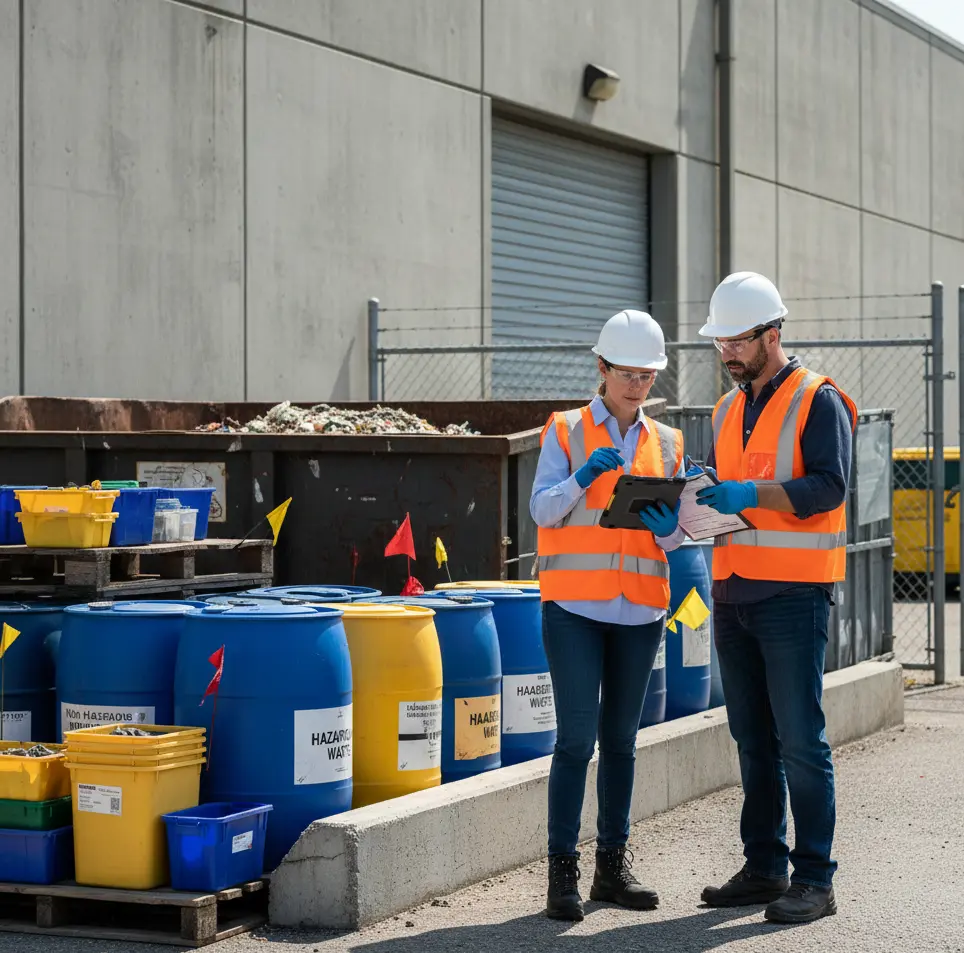
Establishing system boundaries, collecting operational data, quantifying resource inputs, measuring waste outputs, assessing energy consumption, and documenting current environmental performance baselines.

Impact Quantification & Analysis
Calculating carbon footprints, evaluating water impacts, assessing waste generation, analyzing ecosystem effects, benchmarking against industry standards, and identifying significant impact areas requiring attention.

Opportunity Identification & Strategy Development
Identifying improvement opportunities, evaluating technology options, assessing economic feasibility, developing prioritized action plans, and creating comprehensive sustainability strategies aligned with business objectives.

Implementation Support & Performance Monitoring
Providing implementation guidance, establishing measurement systems, developing reporting frameworks, tracking progress against targets, and facilitating continuous improvement supporting long-term sustainability performance advancement.
Why Choose IMARC Engineering for Environmental Impact and Sustainability Studies in India?
Our comprehensive approach combines scientific rigor, business acumen, and practical implementation experience delivering actionable environmental strategies. This proven methodology balances ambitious environmental goals with operational realities while building organizational capabilities supporting sustained environmental leadership.

Regulatory Expertise
Compliance with environmental regulations in India is based on a series of layers that include, but are not limited to the Environment Protection Act 1986, EIA Notification 2006 and its amendments, Water (Prevention and Control of Pollution) Act, Air (Prevention and Control of Pollution) Act, Hazardous and other Wastes Management Rules, and the relevant sectoral norms as prescribed by CPCB and State Pollution Control Boards. At IMARC Engineering, we are well-versed in all aspects of the above-mentioned regulation and, thus, ensure that our environmental studies address all the specific requirements for documentation and technical inputs that are required by applications for MoEFCC Environmental Clearance, SPCB Consents to establish and operate and NGT requirements without necessitating re-submission at a later stage due to inadequate documentation.

Integrated Environmental Baseline Characterisation and Impact Quantification
Environmental Impact Assessments which contain generic baseline information and qualitative impact description without any quantified impact prediction will frequently be sent back to developers for further baseline studies because of data insufficiency problems, causing substantial delays in the project schedule. IMARC Engineering provides baseline characterization on site specific basis, undertaking baseline air quality measurements, measurement of water quality in ground and surface water, soil characterization, sound level measurement, and ecological baseline information during specified seasons of the year. IMARC Engineering also uses recognized methods for quantifying project impacts such as air dispersion modeling, sound propagation modeling, and hydrological impact assessment according to the CPCB/MoEFCC criteria.

Carbon Footprint Measurement and Decarbonisation Strategy Development
The process of carbon footprint measurement for industrial operations in India involves setting the scope boundaries according to the GHG Protocol, selecting the appropriate emission factors from Indian sources like those of the Central Electricity Authority, and adopting methodologies that satisfy the demands of international guidelines, such as CDP disclosure, Science Based Targets Initiative (SBTi) goals, and customer sustainability due diligence in the export market. IMARC Engineering carries out carbon footprint measurements in Scope 1, Scope 2, and Scope 3, which are technically robust, independently verifiable, and are designed to meet the ESG reporting requirements that the client intends to report. This includes CDP disclosure, Global Reporting Initiative (GRI), Business Responsibility for Sustainability Report (BRSR), and international customers' sustainability due diligence.

Water Stewardship and Effluent Management Planning
In India, regulations governing industrial water management have become increasingly stringent with CPCB and State Pollution Control Boards, with zero liquid discharge being a requirement in water-scarce regions and industries such as textile manufacturing, pharma, and food production, whereas restrictions on water availability and rising costs of groundwater extraction provide independent reasons for water management. IMARC Engineering undertakes an analysis of the water balance within the industrial plant, identifying all the sources of water inflows, consumption in the manufacturing process, and discharge, identifying ways to reduce and reuse water in the industry through water management strategies, and implementing zero liquid discharge if required under mandate or economically feasible. The team provides design solutions for treating and recycling effluents and maintaining compliance with CPCB discharge norms while ensuring minimal water withdrawal.

ESG Framework Alignment for Investor and Customer Requirements
The ESG disclosure regulations for Indian manufacturing companies have seen significant changes, the SEBI BRSR regulations have made it compulsory for the top 1,000 manufacturing companies in terms of market capitalization to disclose their ESG data, international institutional investors have begun screening Indian manufacturing companies according to their ESG criteria, and export markets in Europe and North America have been demanding sustainability due diligence from Indian manufacturing companies that form part of their supply chain. IMARC Engineering offers services that include the development of ESG baseline data and a sustainability improvement program that is consistent with mandatory BRSR regulations, GRI Standards, CDP questionnaire requirements, and customer-specific supply chain sustainability audits.

Lifecycle Assessment for Product and Process Environmental Optimisation
Lifecycle assessment (LCA) is a methodology that assesses the environmental impact of a product or process throughout its entire lifecycle from raw material acquisition, manufacture, delivery, use, and disposal, giving environmental impact assessment needed for EPD, green procurement requirements, export compliance with environmental standards, and internal decision-making regarding process design. For Indian companies seeking markets in Europe, whose imports will have to meet the requirements of the EU Green Deal and CBAM, LCA can provide the information needed about their products' carbon footprints to understand and minimize any risk of CBAM liability. IMARC Engineering performs lifecycle assessments conforming to ISO 14040 and ISO 14044, calibrated for the unique characteristics of the client’s product systems, employing local Indian data as well as internationally respected background databases, to provide LCA results that are technically defendable.
Environmental Impact and Sustainability Studies Across Industrial Sectors in India
IMARC Engineering delivers environmental impact assessment and sustainability study services across all major manufacturing and industrial sectors in India.
EIA and EC application support for Category A and B projects; CPCB and SPCB Consent to Establish and Operate documentation; hazardous waste management plan preparation under HWM Rules 2016; ZLD assessment for pharmaceutical effluent; stack emission compliance assessment; and carbon footprint measurement aligned with CDP disclosure and SBTi pharmaceutical sector pathway requirements.
Environmental baseline and impact assessment for greenfield food processing facilities; FSSAI-aligned water quality and effluent management planning; organic effluent treatment design assessment; solid food waste management plan preparation; cold chain refrigerant management and GHG accounting; and water stress risk assessment for facilities in water-scarce agricultural regions.
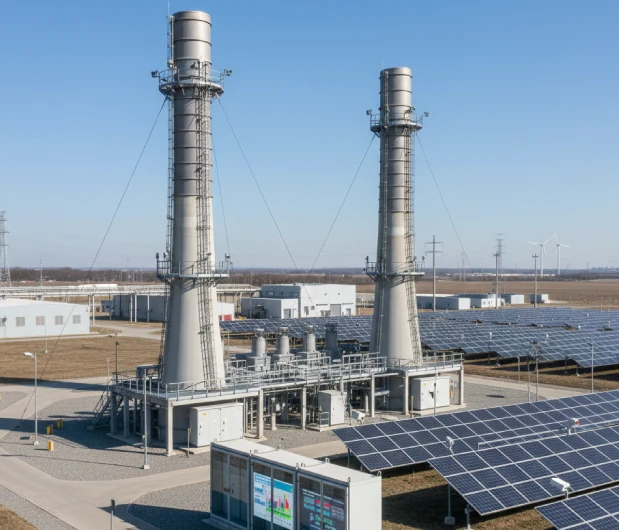
Environmental and Social Impact Assessment (ESIA) for power generation, renewable energy, and transmission infrastructure; biodiversity impact assessment and mitigation planning; EHS management system design aligned with IFC Performance Standards; carbon emission quantification for CDM and voluntary carbon market project documentation; and cumulative environmental impact assessment for multi-component energy projects.
EIA and Forest Clearance documentation for mining and mineral processing projects; CPCB ambient air and mine water quality compliance assessment; mine closure and land reclamation environmental planning; tailings management and groundwater protection plan; and GHG emissions inventory for Scope 1 and 2 sources across extraction and processing operations.
EIA preparation for Category B1 and Category A projects under EIA Notification 2006; environmental baseline characterisation including ecology, hydrology, and soil assessment; public hearing documentation and stakeholder engagement support; environmental management plan and monitoring programme design; and green building certification support for IGBC/GRIHA rating applications.
Factory consent documentation for SPCB Consent to Establish and Operate; ambient air quality and noise impact assessment; hazardous waste and e-waste management planning; energy audit and ISO 50001 gap assessment; BRSR environmental indicator data collection and reporting; and carbon footprint assessment aligned with export market customer ESG due diligence requirements.
Explore Related Services
Environmental Compliance Audits
Green Building Certification Support
Packaging Design and Labelling
Trusted by Industry Leaders
We partner with global enterprises and ambitious businesses across sectors to deliver operational excellence, strategic insights, and sustainable growth through integrated solutions.










Success in Their Words
Real feedback from clients across industries. Discover how our solutions delivered measurable impact and operational excellence.

I wanted to express my sincere appreciation for your efforts in handling this matter. Your dedication and commitment have been truly commendable, and it is evident that you have put in tremendous hard work and expertise into resolving the issues at hand. We are greatly interested in continuing our collaboration with you in the future, as your professionalism and reliability have made you a trusted partner. Thank you once again for your invaluable contribution. We look forward to strengthening our partnership ahead.

It has been a pleasure working with the IMARC team. The insights provided were structured, clear, and highly valuable, helping us strengthen both our technical and financial planning with confidence. We deeply appreciate the team’s professionalism, responsiveness, and attention to detail throughout the engagement. Every requirement was well understood and effectively incorporated, resulting in a comprehensive and actionable output. Overall, our experience has been excellent, and I would gladly recommend IMARC to organizations seeking a reliable research partner.

Your service is truly exceptional. Working with the IMARC team has been a seamless and professional experience. The clarity of communication, responsiveness to queries, and consistent support at every stage made the entire engagement highly efficient. The insights shared were well-structured, practical, and perfectly aligned with our requirements, helping us make informed decisions with confidence. Overall, the dedication and professionalism demonstrated by your team stand out, and I would be glad to recommend IMARC as a reliable and trustworthy research partner.

IMARC did an outstanding job in preparing our study. They were punctual, precise, and consistently responsive throughout the entire process. The team delivered all the data we required in a clear, well-organized, and highly professional format. Their strong attention to detail, combined with their ability to meet every deadline without compromising quality, truly set them apart. Overall, their reliability and commitment made them an exceptional partner for our project, and we would gladly work with them again in the future.

IMARC made the whole process incredibly easy from start to finish. Everyone I interacted with via email was polite, professional, and straightforward to deal with, always keeping their promises regarding delivery timelines and remaining consistently solutions-focused. From my very first contact, I appreciated the professionalism and support shown by the entire IMARC team. I highly recommend IMARC to anyone seeking timely, affordable, and reliable information or advice. My experience with IMARC was excellent, and I truly cannot fault any aspect of it.

I’d like to express my sincere gratitude for the excellent work you accomplished with the study. Your ability to quickly understand our requirements and deliver high-quality results under tight timelines truly reflects your expertise, exceptional work ethic, and unwavering commitment to your customer’s success. The professionalism and responsiveness you demonstrated throughout the process made a significant difference. Our entire team and company are incredibly thankful for your dedication, reliability, and support. Once again, thank you for your outstanding contribution.
Frequently Asked Questions: Environmental Impact and Sustainability Studies in India
We have compiled answers to common questions investors and business leaders ask about environmental impact and sustainability studies. These insights address study scope, investment requirements, business benefits, measurement methodologies, and strategic value of comprehensive sustainability programs.
Speak to Our Environmental Impact and Sustainability Studies Team
Whether you are a manufacturer, developer, or exporter, IMARC Engineering provides environmental and ESG compliance support aligned with Ministry of Environment, Forest and Climate Change and SEBI requirements. This includes EIA preparation, SPCB consents, ESG and carbon reporting, lifecycle assessments, and international compliance support, ensuring regulatory approval, investor readiness, and market-aligned sustainability performance.