
Optimizing Procurement Through Strategic Planning and Analysis
Develop procurement strategies and conduct detailed cost benchmarking that optimize purchasing decisions, reduce total ownership costs, improve supplier relationships, and enhance supply chain efficiency for manufacturing operations in India across industries.
Contact Us

Procurement Strategy and Cost Benchmarking in India
Procurement strategy and cost benchmarking is the process of analysing purchasing patterns, benchmarking costs against market rates, and developing category-specific sourcing strategies that reduce total procurement cost while maintaining supply chain resilience. In India, procurement costs represent 60–70% of total manufacturing cost for most sectors, making procurement strategy one of the highest-impact levers for improving manufacturing competitiveness and profitability.
IMARC Engineering’s procurement strategy and cost benchmarking services in India cover spend analysis, category strategy development, cost benchmarking against current Indian market rates, supplier consolidation planning, total cost of ownership analysis, and sourcing methodology design across pharmaceuticals, food processing, chemicals, and FMCG manufacturing operations.
India’s procurement landscape carries specific opportunities and challenges, GeM portal access for government-linked procurement, MSME supplier base variability, import duty structures on raw materials and equipment, GST input credit optimisation, and commodity price volatility for agricultural raw materials and APIs. IMARC Engineering incorporates these India-specific factors into every procurement strategy engagement, ensuring recommendations reflect actual market conditions rather than generic best practice frameworks.
Our Strategic Methodology for Procurement Optimization and Cost Benchmarking
Our systematic procurement strategy development methodology combines spend analysis, market intelligence, and best practice assessment to deliver comprehensive optimization roadmaps. This proven four-phase approach ensures thorough procurement analysis, supporting cost reduction and performance improvement.


Spend Analysis & Procurement Baseline Assessment
Analyzing historical purchasing data, categorizing expenditures, evaluating supplier base composition, assessing procurement processes, and establishing baseline performance metrics across categories.

Market Intelligence & Cost Benchmarking
Conducting comprehensive market research, gathering competitive pricing intelligence, analyzing industry benchmarks, evaluating total cost of ownership, and identifying cost optimization opportunities.

Strategy Development & Implementation Planning
Designing category-specific procurement strategies, developing supplier consolidation plans, establishing sourcing methodologies, creating negotiation frameworks, and building implementation roadmaps.

Performance Monitoring & Continuous Improvement
Establishing key performance indicators, implementing tracking mechanisms, conducting periodic reviews, identifying further optimization opportunities, and supporting sustained procurement excellence.
Why Choose IMARC Engineering for Procurement Strategy and Cost Benchmarking in India?
Our integrated procurement optimization approach combines analytical rigor with, practical implementation focus to deliver measurable cost savings. This comprehensive methodology ensures sustainable procurement improvement supporting operational efficiency and competitive advantage.

Independent, Conflict-Free Procurement Advisory
Procurement advisory services in India are frequently provided by consultants with commercial relationships with supplier networks, creating a structural bias towards supplier recommendations that generate referral income rather than lowest-cost outcomes for the client. IMARC Engineering has no commercial relationships with any raw material supplier, equipment vendor, or logistics provider in India. Every procurement strategy recommendation is based exclusively on a structured analysis of the client’s spend categories, market price benchmarks, and supply chain risk profile, ensuring that sourcing recommendations reflect genuine cost optimisation rather than directed channel placement. This independence is particularly valuable in categories where supplier-side advisory is prevalent, including pharmaceutical API sourcing, specialty chemical procurement, and capital equipment purchasing where vendor-aligned advisors systematically recommend higher-cost options that generate commercial benefits for the advisor rather than the client.

Current Indian Market Price Intelligence
Cost benchmarking that uses industry average data from global procurement surveys or outdated Indian market studies produces reference points that are too broad, too stale, and too remote from the client’s actual procurement context to support actionable negotiation or sourcing decisions. A benchmark that indicates a client is paying above ‘industry average’ for a commodity chemical provides no actionable intelligence about whether better pricing is available from domestic suppliers in Gujarat, what the current spot and forward price structure looks like, or what commercial terms are achievable from an alternative supplier in the current market. IMARC Engineering develops cost benchmarks from current primary market data, including recent transaction pricing from comparable buyers, supplier quote analysis, import trade data from DGFT records, and commodity price index tracking, producing benchmarks that reflect actual achievable prices in the current Indian market rather than historical averages.

Identification of the Highest-Value Procurement Improvement Opportunities
Manufacturing companies in India with hundreds or thousands of active procurement categories cannot apply strategic procurement effort to every category simultaneously. Spend analysis is the diagnostic tool that directs procurement improvement effort toward the categories where improvement will generate the greatest financial return, identifying which categories represent the largest spend concentration, which have the most fragmented supplier base indicating consolidation opportunity, which have the largest variance between current prices and achievable benchmarks, and which carry the highest supply chain risk from single-source dependency or import exposure. IMARC Engineering conducts spend analysis from the client’s purchasing transaction data, producing a category-level spend map with opportunity sizing that quantifies the saving potential in each category and prioritises the sequence of category strategy development to maximise the procurement improvement programme’s financial impact in the shortest timeframe.

Total Cost of Ownership Analysis
Procurement decisions in Indian manufacturing that are made on purchase price alone systematically underestimate the true cost of sourcing from low-price, unreliable, or geographically distant suppliers. A domestic MSME supplier offering API below the established supplier’s price may generate a net higher total cost if its quality rejection rate requires additional incoming inspection, its delivery reliability requires higher safety stock holding, or its batch-to-batch variability generates yield losses in the downstream formulation process. An imported raw material at a lower CIF price may carry customs duty, import lead time costs, and supply disruption risk that eliminate the price advantage relative to a domestically sourced alternative. IMARC Engineering’s total cost of ownership analysis quantifies quality cost, supply reliability cost, lead time inventory carrying cost, customs and import cost, and supplier management cost alongside purchase price, producing a true economic comparison that supports sourcing decisions on the basis of total value delivered rather than unit price alone.

Category Strategy Development
Different procurement categories require fundamentally different sourcing strategies depending on the market structure, supply concentration, specification complexity, and strategic importance of the category to the manufacturing operation. A commodity chemical available from multiple domestic suppliers in a competitive market warrants a competitive tendering strategy with frequent re-tendering and price indexation clauses. A specialised pharmaceutical excipient available from only two qualified global manufacturers warrants a partnership strategy focused on supply security, quality assurance, and preferential allocation during shortage periods. A capital equipment category where total cost of ownership is dominated by maintenance and spare parts costs warrants a lifecycle cost-based sourcing strategy rather than a capital price minimisation approach. IMARC Engineering develops category-specific sourcing strategies aligned to the structural characteristics of each market, applying competitive tendering where it generates cost reduction, and collaborative supplier development where supply security and quality consistency are the dominant value drivers.

End-to-End Implementation Support
Procurement strategy documents that are delivered without implementation support frequently fail to generate their projected savings because the internal procurement team lacks either the market intelligence or the negotiation capability to execute the strategies as designed. IMARC Engineering supports procurement strategy implementation through the complete cycle from spend analysis and category strategy development through supplier shortlisting and RFQ preparation, bid evaluation and commercial normalisation, negotiation support with market price reference data, contract structuring with price Indexation and performance obligations, and post-contract savings tracking against projected benefits. For clients establishing new procurement functions or upgrading procurement capability as part of a manufacturing scale-up, IMARC Engineering also provides procurement process design, sourcing policy development, supplier qualification framework design, and procurement team capability development, building the internal capability required to sustain procurement improvement outcomes beyond the initial engagement.
Procurement Strategy and Cost Benchmarking Across Key Sectors in India
IMARC Engineering delivers spend analysis, cost benchmarking, category strategy development, supplier consolidation planning, and total cost of ownership analysis across India’s most active manufacturing sectors
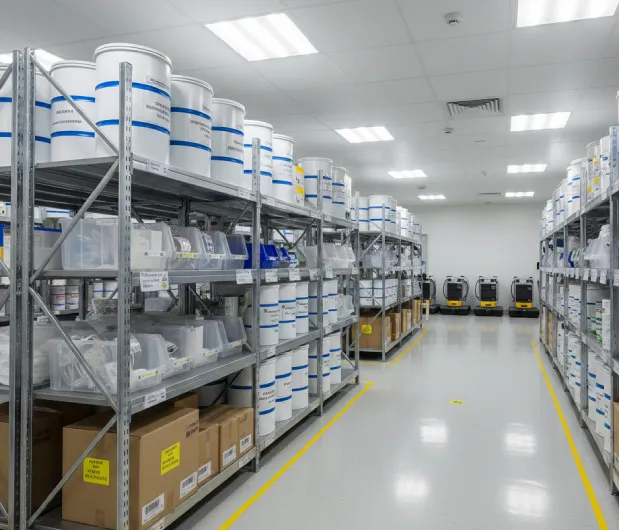
Spend analysis and cost benchmarking for API, excipient, and packaging material categories against current Indian and import market pricing. China-sourced API price benchmarking with domestic alternative assessment, import duty and supply risk quantification, and dual-sourcing strategy development for single-source dependency categories. CDSCO-compliant supplier qualification framework design integrating procurement strategy with GMP vendor approval obligations.
Agricultural commodity procurement strategy incorporating seasonal pricing cycles, forward contract evaluation for key inputs including edible oils, sugar, and dairy solids, and domestic versus import sourcing optimisation. Packaging material spend consolidation across primary and secondary packaging categories. FSSAI-compliant supplier qualification integrated with procurement category strategy for food-contact material and ingredient suppliers.
Raw material cost benchmarking against DGFT import trade data and domestic market pricing for key chemical feedstock categories. Solvent and commodity chemical supplier consolidation strategy development. Import duty structure analysis including EPCG scheme eligibility for capital goods. Total cost of ownership analysis for imported specialty chemical inputs incorporating customs duty, lead time inventory cost, and supply disruption risk against domestic alternative pricing.
Spend analysis across fragrance, active ingredient, packaging, and contract manufacturing categories with opportunity sizing by category. Packaging material cost benchmarking against current Indian convertor pricing for glass, plastic, laminate, and carton categories. Contract manufacturing cost benchmarking for outsourced production. Supplier consolidation planning for fragmented packaging supplier bases with volume aggregation economics quantification.
Technical grade and formulation raw material cost benchmarking against import trade data and domestic market pricing. Procurement strategy for seasonal raw material categories with pre-season procurement economics analysis. Supplier qualification framework integrating CIB&RC registration requirements with procurement approval processes. Solvent and packaging procurement consolidation strategy for multi-product agrochemical manufacturing operations.
Component and sub-assembly cost benchmarking against import trade data for precision components sourced from European and Asian OEM suppliers. Domestic alternative supplier assessment for non-safety-critical components with cost reduction quantification. Total cost of ownership analysis for imported components incorporating customs duty, lead time inventory cost, and qualification change notification cost under ISO 13485 change control. EPCG scheme eligibility assessment for imported capital equipment procurement.
Steel, aluminium, and engineering plastics commodity procurement strategy incorporating price index hedging frameworks and volume commitment economics. Machine tool consumables and tooling spend consolidation across cutting tool, abrasive, and coolant categories. Domestic versus import sourcing optimisation for capital equipment and precision components with customs duty and total cost of ownership analysis. Vendor-managed inventory programme design for high-velocity consumable categories reducing procurement transaction cost.
Trusted by Industry Leaders
We partner with global enterprises and ambitious businesses across sectors to deliver operational excellence, strategic insights, and sustainable growth through integrated solutions.










Success in Their Words
Real feedback from clients across industries. Discover how our solutions delivered measurable impact and operational excellence.

I wanted to express my sincere appreciation for your efforts in handling this matter. Your dedication and commitment have been truly commendable, and it is evident that you have put in tremendous hard work and expertise into resolving the issues at hand. We are greatly interested in continuing our collaboration with you in the future, as your professionalism and reliability have made you a trusted partner. Thank you once again for your invaluable contribution. We look forward to strengthening our partnership ahead.

It has been a pleasure working with the IMARC team. The insights provided were structured, clear, and highly valuable, helping us strengthen both our technical and financial planning with confidence. We deeply appreciate the team’s professionalism, responsiveness, and attention to detail throughout the engagement. Every requirement was well understood and effectively incorporated, resulting in a comprehensive and actionable output. Overall, our experience has been excellent, and I would gladly recommend IMARC to organizations seeking a reliable research partner.

Your service is truly exceptional. Working with the IMARC team has been a seamless and professional experience. The clarity of communication, responsiveness to queries, and consistent support at every stage made the entire engagement highly efficient. The insights shared were well-structured, practical, and perfectly aligned with our requirements, helping us make informed decisions with confidence. Overall, the dedication and professionalism demonstrated by your team stand out, and I would be glad to recommend IMARC as a reliable and trustworthy research partner.

IMARC did an outstanding job in preparing our study. They were punctual, precise, and consistently responsive throughout the entire process. The team delivered all the data we required in a clear, well-organized, and highly professional format. Their strong attention to detail, combined with their ability to meet every deadline without compromising quality, truly set them apart. Overall, their reliability and commitment made them an exceptional partner for our project, and we would gladly work with them again in the future.

IMARC made the whole process incredibly easy from start to finish. Everyone I interacted with via email was polite, professional, and straightforward to deal with, always keeping their promises regarding delivery timelines and remaining consistently solutions-focused. From my very first contact, I appreciated the professionalism and support shown by the entire IMARC team. I highly recommend IMARC to anyone seeking timely, affordable, and reliable information or advice. My experience with IMARC was excellent, and I truly cannot fault any aspect of it.

I’d like to express my sincere gratitude for the excellent work you accomplished with the study. Your ability to quickly understand our requirements and deliver high-quality results under tight timelines truly reflects your expertise, exceptional work ethic, and unwavering commitment to your customer’s success. The professionalism and responsiveness you demonstrated throughout the process made a significant difference. Our entire team and company are incredibly thankful for your dedication, reliability, and support. Once again, thank you for your outstanding contribution.
Frequently Asked Questions: Procurement Strategy and Cost Benchmarking in India
We have compiled answers to common questions manufacturers, procurement leaders, and operational executives ask about procurement strategy and cost benchmarking services. These insights address methodology, value delivery, implementation approaches, and expected outcomes.
Speak to Our Procurement Strategy and Cost Benchmarking Team
Whether you are a pharmaceutical, food, chemical, FMCG, agrochemical, medical device, or industrial manufacturer, IMARC Engineering delivers independent procurement strategy and cost benchmarking aligned with standards from Central Drugs Standard Control Organization and Food Safety and Standards Authority of India. Our approach combines market intelligence, total cost of ownership analysis, and category strategy development. We help reduce procurement costs while strengthening supply chain resilience.