Restoring Production Excellence Through Expert Technical Intervention
Minimize downtime and production losses through rapid on-site troubleshooting that identifies all root causes and implements effective solutions through immediate technical expertise.
Contact Us
On-Site Troubleshooting and Technical Support
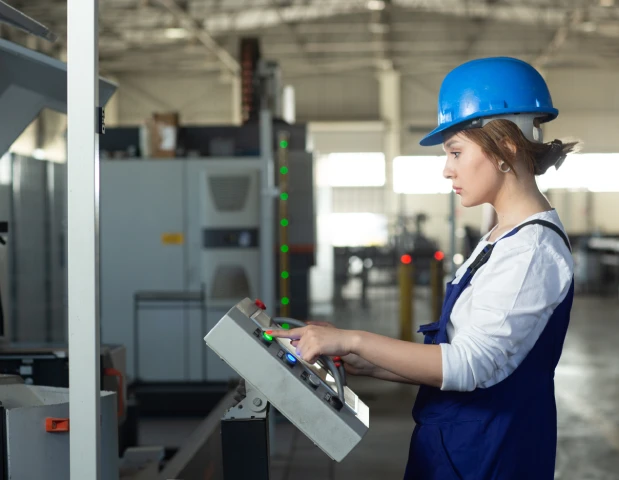
IMARC Engineering delivers rapid on-site troubleshooting and technical support to resolve urgent operational challenges that threaten production continuity. Our experienced engineers mobilize quickly to diagnose equipment failures, process deviations, quality issues, and system malfunctions. With expertise spanning mechanical systems, electrical infrastructure, process control, and manufacturing operations, we identify root causes and implement effective corrective actions.
Our multidisciplinary team combines hands-on manufacturing experience with structured troubleshooting methodologies that accelerate issue resolution. We understand the financial impact of unplanned disruptions and prioritize rapid response with practical, implementable solutions. Engineers work closely with facility teams, restoring operations while addressing underlying causes to prevent recurrence and strengthen internal problem-solving capabilities.
From emergency equipment breakdowns and process optimization challenges to quality investigations and compliance issues, we support manufacturers across sectors. Our technical support safeguards revenue, reduces downtime duration, and demonstrates operational resilience, reliability, and responsiveness to investors, customers, and key stakeholders consistently.
Our Strategic Approach to On-Site Troubleshooting and Technical Support
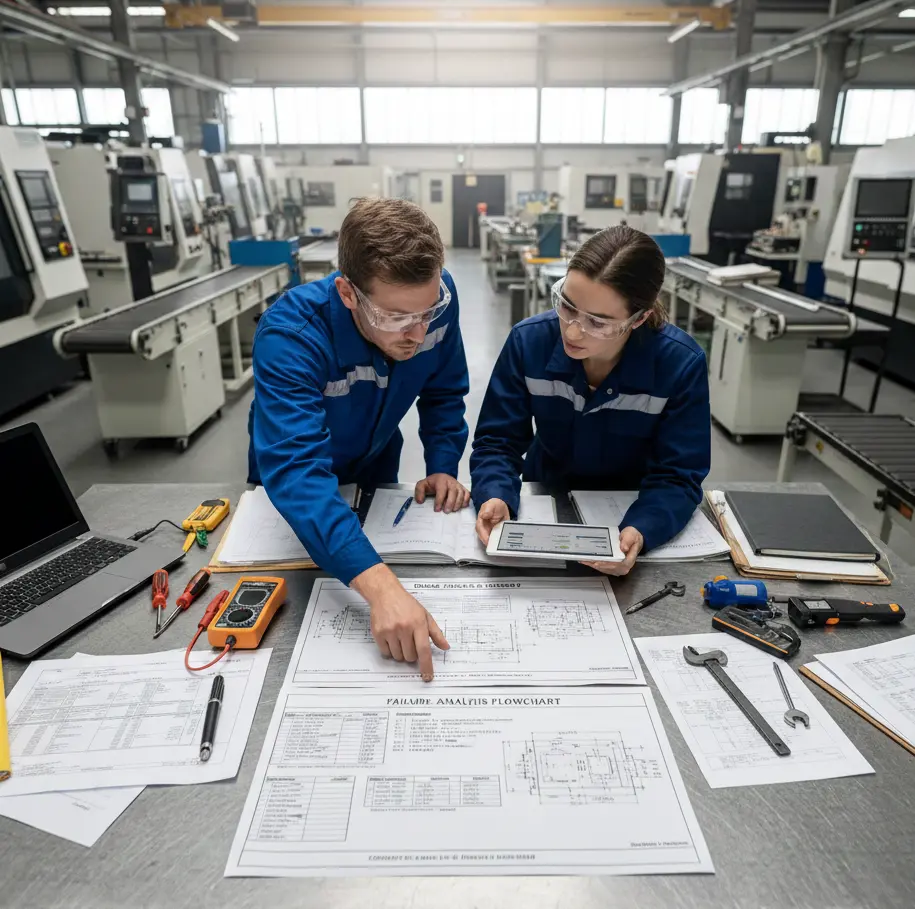
Our systematic troubleshooting methodology combines rapid assessment, root cause analysis, and effective intervention to restore operations quickly. This proven four-phase framework addresses every critical dimension affecting problem resolution and prevents recurring failures.

Rapid Response and Situation Assessment
Deploying experienced engineers quickly to assess situations, understand operational contexts, gather critical information, and prioritize immediate actions stabilizing operations.

Diagnostic Investigation and Root Cause Analysis
Conducting systematic investigations utilizing diagnostic tools, process data analysis, equipment inspection, and analytical techniques identifying underlying failure mechanisms and contributing factors.

Solution Implementation and Verification
Implementing corrective actions addressing root causes, coordinating repair activities, verifying solution effectiveness, and confirming stable operations before demobilization from site.

Documentation and Preventive Recommendations
Documenting findings, corrective actions, and lessons learned while providing preventive maintenance recommendations and operational guidance preventing similar failures.
Why Choose IMARC for On-Site Troubleshooting and Technical Support
Our comprehensive troubleshooting approach combines technical expertise, practical experience, and systematic methodologies to resolve complex operational challenges. This integrated framework addresses every dimension affecting problem resolution and long-term operational reliability.

Minimized Downtime and Production Loss Prevention
Reduce costly downtime through rapid problem resolution restoring production quickly. Our experienced engineers accelerate troubleshooting processes that internal teams might struggle with for extended periods, protecting revenue and meeting customer commitments.

Expert Technical Capabilities and Specialized Knowledge
Access specialized expertise beyond typical internal capabilities addressing complex technical challenges. Our engineers bring diverse manufacturing backgrounds, advanced diagnostic skills, and extensive problem-solving experience across multiple industries and technologies.

Root Cause Resolution and Recurrence Prevention
Address underlying failure mechanisms rather than symptoms through systematic root cause analysis. Our thorough investigations identify contributing factors enabling permanent corrective actions preventing expensive recurring failures and repeated downtime.

Knowledge Transfer and Capability Building
Enhance internal technical capabilities through knowledge sharing during troubleshooting activities. Our collaborative approach transfers diagnostic techniques, problem-solving methodologies, and technical insights strengthening your team's competencies for future challenges.

Flexible Engagement and Rapid Mobilization
Deploy technical resources quickly without long-term commitments or staffing overhead. Our flexible engagement models deliver expert support when required, scaling seamlessly with operational needs during critical periods while avoiding permanent headcount increases and maintaining cost control and organizational agility.

Objective Analysis and Fresh Perspectives
Benefit from unbiased technical perspectives unconstrained by organizational assumptions or historical precedent. External engineers identify overlooked issues and alternative solutions that internal teams may miss due to familiarity bias, delivering clearer diagnostics, objective analysis, and more effective resolution.
Specialized On-Site Troubleshooting and Technical Support Across Manufacturing Sectors
IMARC Engineering delivers industry-specific troubleshooting expertise backed by deep sector knowledge and operational experience. Our understanding of industry-specific processes, equipment, and failure modes guarantees effective problem resolution for your manufacturing operations.
Pharmaceutical troubleshooting addresses cleanroom HVAC failures, production equipment malfunctions, contamination sources, and validation deviations. Our approach aligns quick resolution with GMP compliance, handling tablet press and coating issues, sterile filling problems, and QC system errors while maintaining documentation control and regulatory expectations throughout problem-solving.
Food industry troubleshooting targets refrigeration issues, packaging line stoppages, sanitation failures, and quality deviations. We resolve cooking, cooling, filling, and CIP system problems while safeguarding food safety through HACCP adherence, allergen control, and strict sanitation standards during recovery efforts.
Chemical processing operations demand root-cause evaluation of reactor inefficiencies, distillation problems, heat exchanger fouling, pump failures, and control deviations. Investigations address yield loss, corrosion, catalyst issues, and material compatibility concerns while upholding process safety management requirements during corrective action implementation.
Technology manufacturing requires resolution of yield drops, contamination events, precision equipment failures, and automation disruptions. We analyze defect mechanisms, diagnose process capability gaps, and correct interactions between critical parameters and product quality across semiconductor, electronics assembly, and advanced technology production environments.
In the power sector, troubleshooting covers turbine, boiler, and generator malfunction, instrumentation faults, vibration issues, and emissions control challenges. We resolve system-level performance losses across conventional plants, cogeneration units, and renewable assets to restore reliability, improve efficiency, and maintain high plant availability.
Troubleshooting in agro-processing facilities involves refrigeration breakdowns, grain handling failures, packaging line issues, and sanitation system problems. We restore performance in drying, storage, and harvesting equipment while maintaining food safety compliance and supporting seasonal productivity demands in agricultural supply chains.
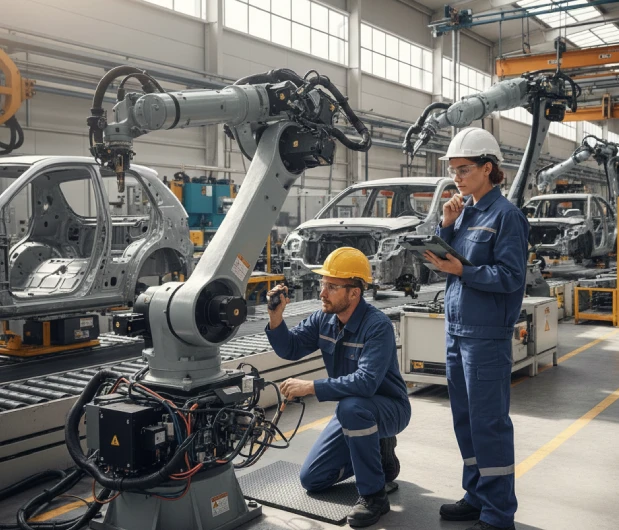
Automotive troubleshooting addresses robotic faults, welding errors, conveyor failures, paint booth issues, and assembly disruptions. Root-cause analysis resolves dimensional variation, surface defects, and quality drift in component and vehicle production, minimizing downtime across body shops, powertrain lines, and final assembly operations.
Distribution and logistics environments require rapid response to conveyor failures, automated storage malfunctions, dock equipment issues, and facility system outages. We troubleshoot forklift fleets, sortation systems, and inventory discrepancies to protect throughput and operational continuity across warehousing and fulfillment operations.
Troubleshooting for manufacturing operations focuses on equipment breakdowns, material handling issues, and process deviations impacting productivity. We diagnose mechanical, electrical, pneumatic, and control failures across machining, welding, forming, and automated systems, ensuring rapid resolution that supports continuous operation in both assembly and heavy industrial environments.
Trusted by Industry Leaders
We partner with global enterprises and ambitious businesses across sectors to deliver operational excellence, strategic insights, and sustainable growth through integrated solutions.
Success in Their Words
Real feedback from clients across industries. Discover how our solutions delivered measurable impact and operational excellence.
I wanted to express my sincere appreciation for your efforts in handling this matter. Your dedication and commitment have been truly commendable, and it is evident that you have put in tremendous hard work and expertise into resolving the issues at hand. We are greatly interested in continuing our collaboration with you in the future, as your professionalism and reliability have made you a trusted partner. Thank you once again for your invaluable contribution. We look forward to strengthening our partnership ahead.
It has been a pleasure working with the IMARC team. The insights provided were structured, clear, and highly valuable, helping us strengthen both our technical and financial planning with confidence. We deeply appreciate the team’s professionalism, responsiveness, and attention to detail throughout the engagement. Every requirement was well understood and effectively incorporated, resulting in a comprehensive and actionable output. Overall, our experience has been excellent, and I would gladly recommend IMARC to organizations seeking a reliable research partner.
Your service is truly exceptional. Working with the IMARC team has been a seamless and professional experience. The clarity of communication, responsiveness to queries, and consistent support at every stage made the entire engagement highly efficient. The insights shared were well-structured, practical, and perfectly aligned with our requirements, helping us make informed decisions with confidence. Overall, the dedication and professionalism demonstrated by your team stand out, and I would be glad to recommend IMARC as a reliable and trustworthy research partner.
IMARC did an outstanding job in preparing our study. They were punctual, precise, and consistently responsive throughout the entire process. The team delivered all the data we required in a clear, well-organized, and highly professional format. Their strong attention to detail, combined with their ability to meet every deadline without compromising quality, truly set them apart. Overall, their reliability and commitment made them an exceptional partner for our project, and we would gladly work with them again in the future.
IMARC made the whole process incredibly easy from start to finish. Everyone I interacted with via email was polite, professional, and straightforward to deal with, always keeping their promises regarding delivery timelines and remaining consistently solutions-focused. From my very first contact, I appreciated the professionalism and support shown by the entire IMARC team. I highly recommend IMARC to anyone seeking timely, affordable, and reliable information or advice. My experience with IMARC was excellent, and I truly cannot fault any aspect of it.
I’d like to express my sincere gratitude for the excellent work you accomplished with the study. Your ability to quickly understand our requirements and deliver high-quality results under tight timelines truly reflects your expertise, exceptional work ethic, and unwavering commitment to your customer’s success. The professionalism and responsiveness you demonstrated throughout the process made a significant difference. Our entire team and company are incredibly thankful for your dedication, reliability, and support. Once again, thank you for your outstanding contribution.
Frequently Asked Questions
We’ve compiled answers to the most common questions investors, facility managers, and operations leaders ask about on-site troubleshooting and technical support. These insights address critical concerns around response capabilities, engagement approaches, cost considerations, etc.
Ready to Optimize Equipment Lifecycle Management?
Contact our asset management specialists today to discuss your equipment assessment needs and discover how IMARC Engineering can deliver comprehensive lifecycle evaluations supporting strategic capital planning.