Comprehensive Industrial Asset Transfer and Operational Readiness Solutions
Ensure safe and efficient equipment relocation with end-to-end services that minimize downtime, preserve performance integrity, and support seamless recommissioning across manufacturing facilities in India.
Contact Us
Equipment Relocation & Reinstallation in India
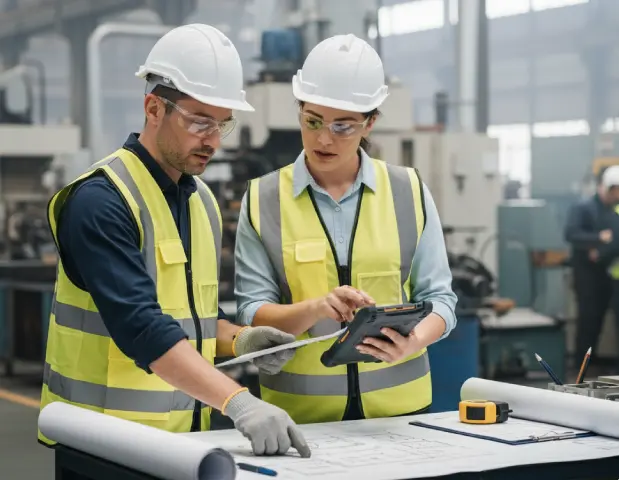
Equipment relocation and reinstallation in India is a high-risk, precision-driven process required during plant expansion, facility consolidation, technology upgrades, or inter-state manufacturing shifts. With the Government of India targeting manufacturing contribution of 25% to GDP and driving industrial growth through Production Linked Incentive (PLI) schemes across 14+ sectors with an outlay of ₹1.97 lakh crore, large-scale capacity additions and plant relocations are accelerating across industries.
On the other hand, the logistics network of India introduces another layer of operational complexity to the process. According to recent government-sponsored evaluations, the logistics cost stands at ~7.97% of GDP, with the costs related to transport, storage, and interstate transport comprising a considerable chunk of the operational cost for producers. Thus, along with interstate movement through GST, factory recertifications, utilities, and lack of experienced riggers, equipment relocation planning becomes crucial.
IMARC Engineering offers comprehensive services for the relocation and installation of equipment in India, including pre-movement planning, equipment evaluation, disassembly, packing, transportation management, reinstallation, precise alignment, and commissioning. We use our engineering expertise to achieve shorter downtimes, ensure the preservation of the equipment, and comply with regulations.
Our Structured Equipment Relocation and Reinstallation Methodology
Our relocation process follows a systematic, data-driven framework designed to manage every stage efficiently. It ensures project safety, minimal downtime, and reliable equipment performance during dismantling, transport, reinstallation, and commissioning.

Assessment and Planning
We begin with comprehensive site assessments, equipment mapping, and relocation feasibility studies. Detailed engineering documentation, risk analysis, and schedule alignment ensure smooth execution and full readiness for mechanical, electrical, and utility integration at the destination facility.

Dismantling and Packaging
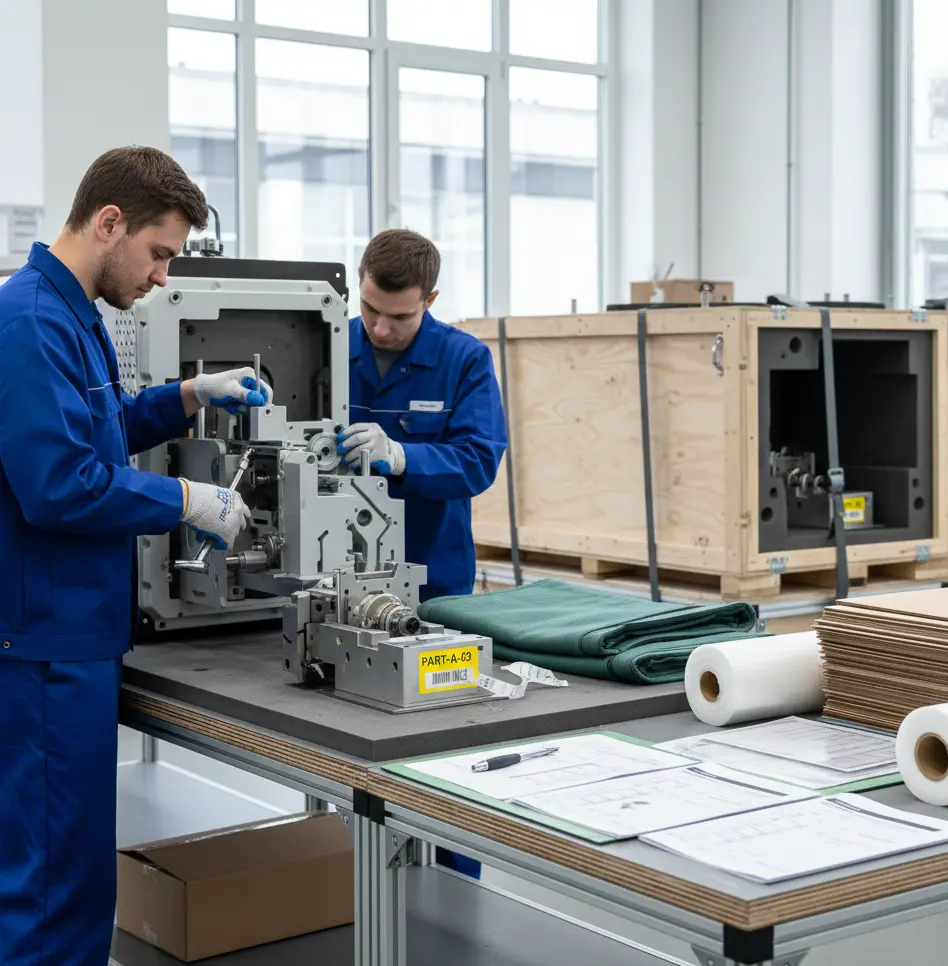
Equipment is carefully disassembled using standardized tools and protective methods. Each component is labeled, documented, and securely packaged to prevent mechanical stress, ensuring accurate reassembly and preservation of structural integrity during relocation.

Transportation and Coordination
We manage end-to-end logistics, including specialized rigging, route planning, and transportation compliance. Coordination with vendors, carriers, and local authorities ensures safe movement, timely delivery, and adherence to regulatory and technical requirements.

Installation and Commissioning
Reinstallation covers structural assembly, precision alignment, and utility connections. Post-installation validation includes calibration, test runs, and performance verification, ensuring that all relocated assets meet design specifications and operational standards.
Why Choose IMARC Engineering for Equipment Relocation & Reinstallation in India?
Our relocation and reinstallation solutions integrate engineering expertise, precision logistics, and technical validation, delivering reliable equipment transfers that reduce risk, minimize production loss, and ensure operational readiness upon project completion.

Engineering-Led Relocation Planning
Treating equipment relocation as a purely logistics activity, without engineering oversight, often leads to damage, misalignment, and delayed restart on Indian projects. Precision equipment dismantled without OEM procedures, inadequately protected during transport, or reinstalled without alignment verification frequently fails performance qualification. IMARC Engineering manages relocation as an engineering-led process, defining OEM-based dismantling procedures, specifying transport protection standards, supervising installation to required tolerances, and ensuring recommissioning demonstrates full performance recovery before production resumes.

GST and Statutory Compliance Management
Inter-state equipment relocation in India involves complex statutory and GST compliance that is often underestimated. Under GST, movement of assets between branches requires IGST payment, E-way bill generation, and appropriate ITC treatment, with non-compliance creating audit risks. At the destination, factory plan approval from state authorities and IBR re-registration for pressure systems are mandatory before operation. IMARC Engineering manages the full statutory and tax compliance process, ensuring accurate documentation and preventing delays, penalties, or post-relocation liabilities.

Equipment Condition Assessment
Relocating equipment without a structured pre-move condition assessment creates significant financial risk. Hidden defects such as wear, misalignment, or fatigue, often surface after restart, leading to disputes and unexpected downtime. Additionally, equipment may be relocated despite being uneconomical to reuse, with maintenance and performance risks outweighing replacement value. IMARC Engineering conducts detailed condition assessments before relocation, identifying defects for remediation and providing informed relocate-versus-replace recommendations based on actual equipment condition and operational requirements.

Skilled Rigging and Heavy Lift Management
Skilled rigging contractor availability in India is limited outside major industrial hubs, creating risks for relocating precision manufacturing, pharmaceutical, and process equipment to Tier II locations. Local contractors often lack the capability for controlled lifting, hydraulic jacking, and precision handling required for such equipment. IMARC Engineering mitigates this by qualifying and mobilising appropriate rigging contractors for each project, ensuring they have the necessary expertise and certifications, and providing on-site engineering supervision to prevent unsafe or improvised handling practices.

Requalification Documentation Management
Equipment relocation in regulated sectors in India requires formal requalification aligned with applicable standards. Central Drugs Standard Control Organization Schedule M mandates IQ, OQ, and PQ requalification with GMP change control before reuse in pharmaceutical production. Food Safety and Standards Authority of India requires revalidation for critical food equipment, while ISO 13485 mandates change control and revalidation for medical devices. IMARC Engineering manages the full requalification lifecycle, from pre-move assessment through IQ/OQ/PQ—delivering a complete, audit-ready dossier without post-relocation remediation.

Production Restart Optimisation
The duration from shutdown to production restart is the key financial metric in equipment relocation, as every day of downtime results in lost revenue and customer risk. Sequential execution, where dismantling, transport, and site readiness are handled one after another, creates avoidable delays. IMARC Engineering addresses this through a parallel-path relocation strategy, initiating planning, foundation preparation, spare parts procurement, and statutory approvals in advance. By overlapping activities wherever feasible, the total shutdown-to-restart timeline is compressed, significantly reducing production interruption and associated financial impact.
Equipment Relocation & Reinstallation Across Key Sectors in India
IMARC Engineering delivers engineering-led dismantling supervision, transportation coordination, precision reinstallation, statutory compliance management, and requalification documentation across India’s most active manufacturing sectors.
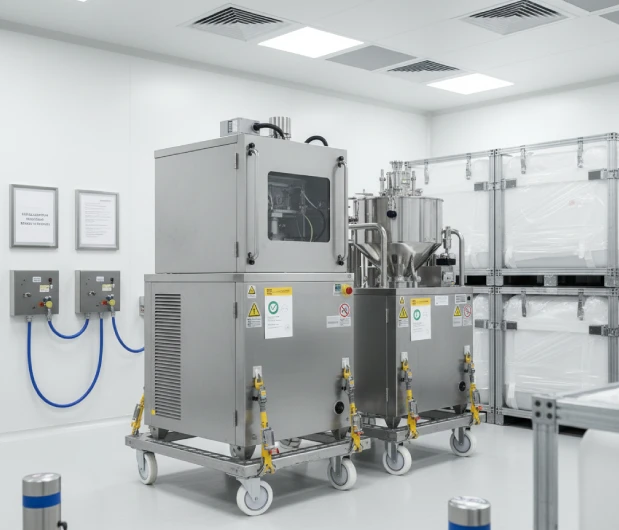
Equipment relocation for pharmaceutical manufacturing equipment including tablet presses, granulators, coating pans, and sterile fill-finish lines. CDSCO Schedule M GMP change control documentation, IQ/OQ/PQ requalification programme management, IBR re-registration coordination for autoclave and clean steam systems, and inter-state GST compliance for equipment movement between manufacturing clusters in Hyderabad, Baddi, Ahmedabad, and Aurangabad.
Equipment relocation for food processing lines including pasteurisers, homogenisers, filling lines, and cold chain systems. FSSAI hygienic design reinstallation verification, CIP system re-integration across relocated process equipment, food safety critical control point revalidation at the destination facility, and Factory Act re-approval documentation for relocated food processing facility equipment in agricultural processing zones.
Equipment relocation for reactors, distillation columns, centrifuges, and heat exchangers in chemical manufacturing facilities. IBR re-registration for pressure vessels and steam systems at destination facilities in Gujarat’s Dahej, Ankleshwar, and Vapi corridors, PESO re-approval for hazardous material handling equipment, CPCB environmental consent condition compliance for relocated effluent treatment systems, and inter-state GST compliance management for high-value chemical plant asset transfers.
Equipment relocation for high-speed filling, packaging, and labelling lines with precision alignment restoration and integrated line performance recommissioning. CDSCO cosmetics manufacturing facility re-approval for relocated personal care product equipment, multi-vendor coordination across concurrent packaging line relocation packages, and accelerated restart programme management for time-sensitive FMCG capacity redeployment projects.
Equipment relocation for agrochemical synthesis, formulation, and packaging equipment with PESO compliance management for flammable and toxic process equipment movement. Hazardous material decontamination protocols before dismantling for equipment in contact with scheduled toxic chemicals, IBR re-inspection for relocated steam-heated process equipment, and CPCB consent condition compliance verification at destination facilities in PESO-notified chemical manufacturing zones.
Equipment relocation for precision medical device manufacturing equipment including CNC machining centres, injection moulding machines, and sterilisation systems. ISO 13485 change control documentation and equipment revalidation programme management, CDSCO Class B and C device manufacturing licence amendment co-ordination for relocated manufacturing equipment, and calibration certificate transfer and recertification management for metrology and inspection equipment.
Equipment relocation for heavy manufacturing equipment including CNC machine tools, heat treatment furnaces, surface finishing systems, and material handling equipment. Precision alignment restoration for machine tools to OEM specification tolerances, Factory Act re-approval documentation for industrial facility equipment relocation in MIDC, GIDC, and SIDCO industrial zones, IBR re-registration for relocated pressure vessels and compressed air receivers, and inter-state transport coordination for oversize and overweight equipment requiring special permits from state highway authorities.
Explore Related Services
Site Supervision and Civil Execution Oversight
Installation Supervision and Equipment Commissioning
Multi-Vendor Coordination and Integration
Utilities Planning (Water, Power, HVAC, Steam)
Trusted by Industry Leaders
We partner with global enterprises and ambitious businesses across sectors to deliver operational excellence, strategic insights, and sustainable growth through integrated solutions.







Success in Their Words
Real feedback from clients across industries. Discover how our solutions delivered measurable impact and operational excellence.

I wanted to express my sincere appreciation for your efforts in handling this matter. Your dedication and commitment have been truly commendable, and it is evident that you have put in tremendous hard work and expertise into resolving the issues at hand. We are greatly interested in continuing our collaboration with you in the future, as your professionalism and reliability have made you a trusted partner. Thank you once again for your invaluable contribution. We look forward to strengthening our partnership ahead.

It has been a pleasure working with the IMARC team. The insights provided were structured, clear, and highly valuable, helping us strengthen both our technical and financial planning with confidence. We deeply appreciate the team’s professionalism, responsiveness, and attention to detail throughout the engagement. Every requirement was well understood and effectively incorporated, resulting in a comprehensive and actionable output. Overall, our experience has been excellent, and I would gladly recommend IMARC to organizations seeking a reliable research partner.

Your service is truly exceptional. Working with the IMARC team has been a seamless and professional experience. The clarity of communication, responsiveness to queries, and consistent support at every stage made the entire engagement highly efficient. The insights shared were well-structured, practical, and perfectly aligned with our requirements, helping us make informed decisions with confidence. Overall, the dedication and professionalism demonstrated by your team stand out, and I would be glad to recommend IMARC as a reliable and trustworthy research partner.

IMARC did an outstanding job in preparing our study. They were punctual, precise, and consistently responsive throughout the entire process. The team delivered all the data we required in a clear, well-organized, and highly professional format. Their strong attention to detail, combined with their ability to meet every deadline without compromising quality, truly set them apart. Overall, their reliability and commitment made them an exceptional partner for our project, and we would gladly work with them again in the future.

IMARC made the whole process incredibly easy from start to finish. Everyone I interacted with via email was polite, professional, and straightforward to deal with, always keeping their promises regarding delivery timelines and remaining consistently solutions-focused. From my very first contact, I appreciated the professionalism and support shown by the entire IMARC team. I highly recommend IMARC to anyone seeking timely, affordable, and reliable information or advice. My experience with IMARC was excellent, and I truly cannot fault any aspect of it.

I’d like to express my sincere gratitude for the excellent work you accomplished with the study. Your ability to quickly understand our requirements and deliver high-quality results under tight timelines truly reflects your expertise, exceptional work ethic, and unwavering commitment to your customer’s success. The professionalism and responsiveness you demonstrated throughout the process made a significant difference. Our entire team and company are incredibly thankful for your dedication, reliability, and support. Once again, thank you for your outstanding contribution.
Frequently Asked Questions
We have compiled investor and operator-focused insights addressing the technical, operational, and financial considerations associated with equipment relocation and reinstallation. This section addresses key questions, providing investors and operators with detailed insights, into process management, risk reduction, cost optimization, and performance assurance.
Speak to Our Equipment Relocation & Reinstallation Team
Whether you are a pharmaceutical, food, chemical, FMCG, medical device, or industrial manufacturer—or an investor managing plant consolidation, IMARC Engineering provides end-to-end equipment relocation and requalification support. This includes change control, multi-vendor coordination, statutory approvals under Central Drugs Standard Control Organization, Food Safety and Standards Authority of India, PESO, and IBR, as well as installation, alignment, and recommissioning. We ensure assets are relocated safely, compliantly, and with minimal downtime, enabling rapid production restart.