Enabling Real-Time Manufacturing Visibility Through Automation in India
Implement automation and digital monitoring systems in India to track operations in real time, improve process control, reduce manual intervention, and enhance manufacturing efficiency.
Contact Us
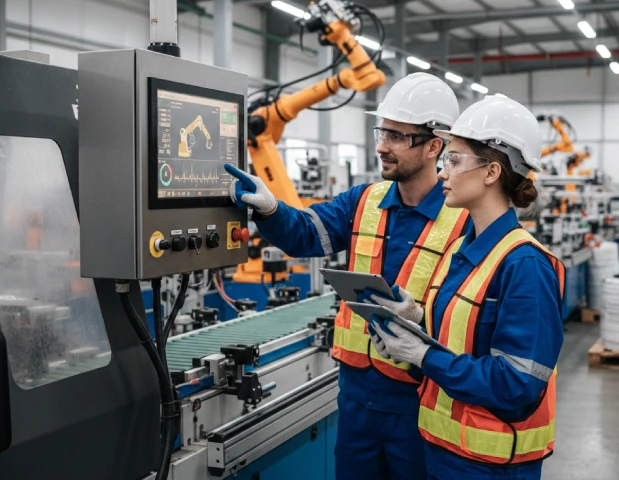
Automation and Digital Monitoring Setup in India
Automation and digital monitoring setup in India help manufacturers track operations in real time, improve process control, and reduce manual intervention across production systems. With Industry 4.0 adoption accelerating, India's industrial automation market is growing at over 8% annually, driven by demand for efficiency, quality, and cost optimization. Studies indicate that automation can reduce unplanned downtime by 35-50% and 20-30% improvements in overall equipment effectiveness (OEE).
In India, producers have started relying on PLC, SCADA, and IoT-enabled monitoring systems to get insights into the production, power consumption, and machine operation in real time - helping them make quicker decisions and manage operations.
IMARC Engineering offers automated digital monitoring solutions installation services in India by providing system design, integration, and performance optimization services. We offer you to install sensors, control systems, and monitoring dashboards to facilitate your monitoring operations.
Our Structured Automation and Digital Monitoring Setup Methodology
Our automation and digital monitoring process follows a structured, multi-phase methodology that ensures precision, reliability, and measurable operational efficiency through every project stage, from initial assessment to full-scale implementation and continuous performance optimization.
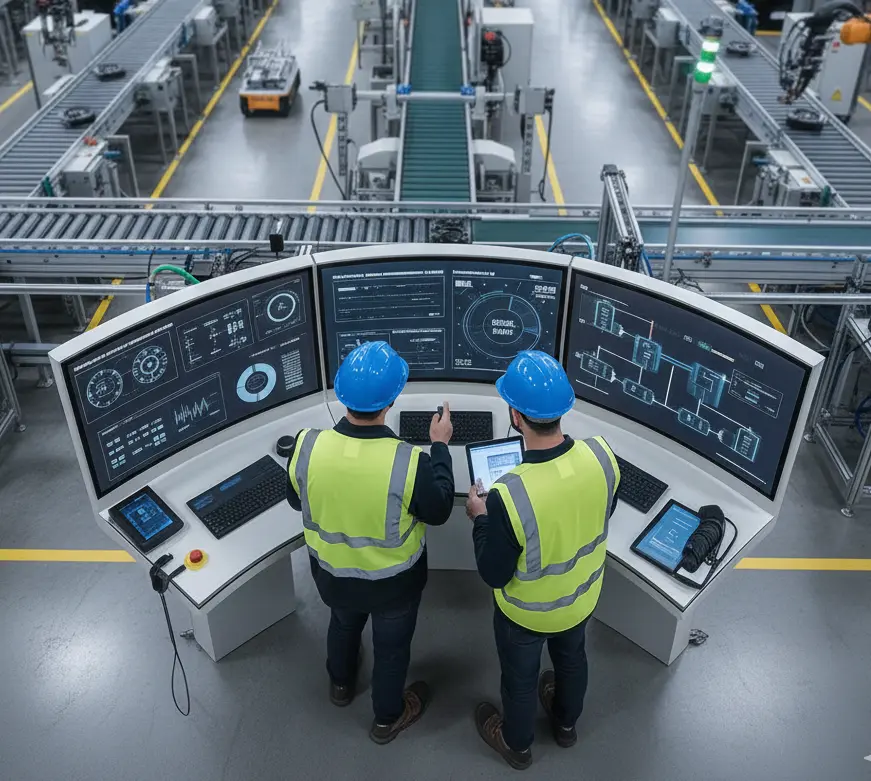

Requirement Assessment & Process Evaluation
We conduct detailed assessments of your current operations, control systems, and data collection practices to identify automation opportunities and define measurable performance goals aligned with strategic objectives.

System Design & Technology Integration
Our engineering team develops tailored automation architectures combining PLCs, SCADA systems, IIoT connectivity, and smart sensors to create fully integrated digital monitoring environments across your facility.

Implementation & Commissioning
We manage system installation, equipment calibration, and digital platform configuration, ensuring seamless communication between devices, software interfaces, and control networks for uninterrupted operations.

Training & Continuous Support
Our specialists train your personnel in using monitoring dashboards, interpreting analytics, and implementing predictive maintenance strategies while providing ongoing technical support and system updates.
Why Choose IMARC Engineering for Automation and Digital Monitoring Setup in India?
Our automation and digital monitoring solutions provide measurable operational improvements, cost savings, and enhanced reliability by combining intelligent control, advanced analytics, and continuous performance tracking to support informed decision-making and sustainable productivity gains.

Process-First System Design
The automation solutions provided by technology providers or system integration companies without an intimate understanding of the manufacturing processes can sometimes result in systems that have a high technical capability but which are poorly aligned in terms of their functionality because they measure the wrong process variables for making decisions on the production process, automate the wrong sequences with built-in inefficiencies in the process, and provide too much data to the operator without giving them additional control capabilities. The systems developed by IMARC Engineering are defined from the process out, whereby the key process variables and control requirements and decision support needs are determined before defining the sensors, control system, and data visualization system to address these needs.

Regulatory Compliance Integration
The automation and monitoring systems in Indian regulated manufacturing industries come with compliance considerations that go far beyond their operational requirements. The pharmaceutical plants should provide 21 CFR Part 11 compliant electronic documentation and audit trails for GMP process parameters. The PESO regulated chemical industries need instrumentation certified according to ATEX/IECEx for hazardous zones. CEMS, which are mandated by CPCB regulations, need to be compliant with CPCB technical guidelines and data communication considerations. Automation for food processing should meet the FSSAI's hygienic design standards of food contact equipment. At IMARC Engineering, our automation systems are designed to fulfil all relevant compliance considerations right from the beginning, which ensures that the automation system meets its dual objectives while eliminating parallel manual recording systems defeating the very purpose of automation.

Technology-Neutral System Architecture and Vendor Selection
Automated system proposals provided by technology providers or system integrators with products from only one OEM are necessarily limited by the product lines of the proposing entity, leading to specifications that favor their products over those of other technology providers, instead of fitting the client needs. IMARC Engineering creates system specifications in a technology-neutral fashion based upon client process needs, operating conditions, ability to maintain, and total cost of ownership, rather than favoring one particular brand of products over another. When different technologies fulfil the needs in question, IMARC Engineering conducts an impartial analysis of available technologies and carries out competitive bidding among technology providers so as to allow the client to choose the most suitable solution.

Legacy System Integration and Phased Implementation Expertise
Manufacturing plants in India will normally have a variety of machinery ages, ranging from newly installed automatic machinery and partially instrumented machinery to manually operated machinery, thereby causing difficulties with integration that companies specialized in greenfield automation projects will be unable to handle. The IMARC Engineering company has extensive experience in analysing legacy systems and developing a plan for integrating them. In such cases, the company analyses the ability of existing machinery to communicate and control as well as their instrumentation status and then devises an interface and strategy for integrating the monitoring and control systems. If replacing the entire legacy system is not justifiable either on practical or financial grounds, IMARC Engineering develops a plan of phased implementation that gradually increases monitoring capabilities.

Operator Training and Change Management for Sustainable Adoption
Technically installed but not operationally utilized systems are able to reap only a portion of the potential gains from such projects. Operators failing to comprehend the output of a given system, lacking confidence in the data produced by the system, or maintaining their current operating procedures despite the data supplied by the system will fail to achieve any productivity gain through the use of the automated control systems. IMARC Engineering ensures that operator training and change management play integral roles within all automated implementations, designing customized training sessions for operators, encouraging managerial involvement with dashboard analysis and production decisions, and analyzing system performance to identify issues with system adoption or residual operating techniques that should have been replaced by the new system.

Scalable Architecture Designed for Industry 4.0 Evolution
Closed architecture or lack of forethought regarding the future need for communication capability results in an impediment to Industry 4.0 progress, unable to link into MES, ERP, or cloud-based analytics that enable the full value of digitally enabled manufacturing to be realised. The design principles of IMARC Engineering take into account open communication capability via OPC-UA, MQTT, and standard industrial ethernet communication, along with architectures designed to ensure future compatibility of progressive integration with MES, ERP, and advanced analytics platforms as the customer's level of digital maturity evolves. Such forward-thinking ensures value is not lost from the initial investment in automation technology as time goes on.
Automation and Digital Monitoring Setup Across Manufacturing Sectors in India
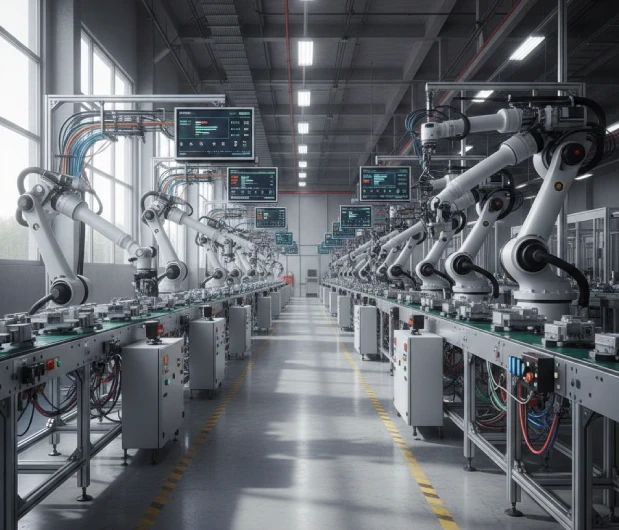
IMARC Engineering delivers automation and digital monitoring implementation across all major manufacturing sectors in India, integrating sector-specific regulatory and operational requirements
21 CFR Part 11-compliant process automation for GMP-regulated parameters; SCADA and BMS integration for clean room environmental monitoring; automated batch record generation; PLC-controlled filling, coating, and packaging line automation; purified water and WFI system automated monitoring; and CDSCO inspection-ready electronic audit trail implementation.
FSSAI-compliant automated temperature and CCP monitoring for HACCP critical control points; automated CIP cycle control and verification; filling line PLC automation with weight and seal integrity monitoring; cold chain temperature telemetry; traceability system integration; and SCADA-based process visualisation for pasteurisation, homogenisation, and packaging operations.
PESO-compliant intrinsically safe instrumentation for hazardous classified areas; DCS-controlled batch and continuous reaction process automation; automated safety interlock and emergency shutdown system implementation; CPCB-mandated CEMS for stack emission monitoring; effluent treatment plant automated control and SCADA monitoring; and process analytical technology integration for inline quality measurement.
High-speed packaging line PLC automation with vision inspection integration; automated checkweigher, labeller, and rejection system control; SCADA-based production monitoring dashboards for multi-line facilities; energy consumption monitoring by production line; traceability and serialisation system implementation for export market compliance; and ERP integration for real-time production versus plan visibility.
Automated BMS and HVAC control for GMP clean rooms and controlled environments; compressed air system automated monitoring with leak detection; boiler and steam system SCADA monitoring; electrical substation automated monitoring and power quality analysis; water treatment and effluent monitoring automation; and integrated facility energy management system implementation for ISO 50001 and green building certification support.
PLC and HMI automation for CNC machine integration and production line control; OEE data collection and dashboard implementation; automated quality inspection system integration; energy metering and monitoring for ISO 50001 compliance; predictive maintenance sensor deployment; and MES integration for production scheduling, work order tracking, and shop floor data collection.
Explore Related Services
OEE (Overall Equipment Effectiveness) Improvement
Process Optimization and Lean Consulting
Smart Factory and Industry 4.0 Integration
Trusted by Industry Leaders
We partner with global enterprises and ambitious businesses across sectors to deliver operational excellence, strategic insights, and sustainable growth through integrated solutions.











Success in Their Words
Real feedback from clients across industries. Discover how our solutions delivered measurable impact and operational excellence.

I wanted to express my sincere appreciation for your efforts in handling this matter. Your dedication and commitment have been truly commendable, and it is evident that you have put in tremendous hard work and expertise into resolving the issues at hand. We are greatly interested in continuing our collaboration with you in the future, as your professionalism and reliability have made you a trusted partner. Thank you once again for your invaluable contribution. We look forward to strengthening our partnership ahead.

It has been a pleasure working with the IMARC team. The insights provided were structured, clear, and highly valuable, helping us strengthen both our technical and financial planning with confidence. We deeply appreciate the team’s professionalism, responsiveness, and attention to detail throughout the engagement. Every requirement was well understood and effectively incorporated, resulting in a comprehensive and actionable output. Overall, our experience has been excellent, and I would gladly recommend IMARC to organizations seeking a reliable research partner.
Your service is truly exceptional. Working with the IMARC team has been a seamless and professional experience. The clarity of communication, responsiveness to queries, and consistent support at every stage made the entire engagement highly efficient. The insights shared were well-structured, practical, and perfectly aligned with our requirements, helping us make informed decisions with confidence. Overall, the dedication and professionalism demonstrated by your team stand out, and I would be glad to recommend IMARC as a reliable and trustworthy research partner.

IMARC did an outstanding job in preparing our study. They were punctual, precise, and consistently responsive throughout the entire process. The team delivered all the data we required in a clear, well-organized, and highly professional format. Their strong attention to detail, combined with their ability to meet every deadline without compromising quality, truly set them apart. Overall, their reliability and commitment made them an exceptional partner for our project, and we would gladly work with them again in the future.

IMARC made the whole process incredibly easy from start to finish. Everyone I interacted with via email was polite, professional, and straightforward to deal with, always keeping their promises regarding delivery timelines and remaining consistently solutions-focused. From my very first contact, I appreciated the professionalism and support shown by the entire IMARC team. I highly recommend IMARC to anyone seeking timely, affordable, and reliable information or advice. My experience with IMARC was excellent, and I truly cannot fault any aspect of it.

I’d like to express my sincere gratitude for the excellent work you accomplished with the study. Your ability to quickly understand our requirements and deliver high-quality results under tight timelines truly reflects your expertise, exceptional work ethic, and unwavering commitment to your customer’s success. The professionalism and responsiveness you demonstrated throughout the process made a significant difference. Our entire team and company are incredibly thankful for your dedication, reliability, and support. Once again, thank you for your outstanding contribution.
Frequently Asked Questions: Automation and Digital Monitoring Setup in India
We have compiled key strategic and operational questions about how automation and digital monitoring systems enhance operational performance, reduce costs, and improve reliability. The answers demonstrate how technology-driven efficiency creates sustained value and supports long-term business growth and investor confidence.
Speak to Our Automation and Digital Monitoring Setup Team
Whether you are a manufacturer or upgrading an existing facility, IMARC Engineering delivers automation and monitoring solutions aligned with Central Drugs Standard Control Organization and Food Safety and Standards Authority of India requirements. This includes process automation, compliance monitoring, OEE and predictive maintenance systems, and integration with existing infrastructure, enabling better control, regulatory compliance, and a scalable Industry 4.0 foundation.